Recent Blog Posts:

Jan. 15, 2025

Roughly 11,000 Homes Will Sell Today – Will Yours Be One of Them?


Are you hesitant to sell your house because you’re worried no one’s buying with rates and prices where they are right now? Here’s some perspective that can help.

The market actually isn’t at a standstill. While there weren’t as many sales last year as there’d be in a normal market, roughly 4.15 million homes still sold (not including new construction), according to the National Association of Realtors (NAR). And the expectation is that number will rise in 2025. That means more people will likely move this year, and they need homes to buy. Homes like yours.

But even if we only match last year’s sales pace, here’s what that looks like.

Every Minute Homes Are Selling – Literally

  • 4.15 million homes ÷ 365 days in a year = 11,370 homes sell each day
  • 11,370 homes ÷ 24 hours in a day = 474 homes sell per hour
  • 474 homes ÷ 60 minutes = roughly 8 homes sell every minute

Think about that. Just in the time it took you to read this, 8 homes sold.

If you’ve been holding off on selling your house because you think buyers aren’t out there, let this reassure you – there are still buyers looking to buy.

Every day, thousands of people need to buy homes. So, while higher home prices and mortgage rates have slowed the market down and forced some buyers onto the sidelines, that doesn’t mean the market isn’t active. Many buyers are still eager to make a move because life doesn’t wait for perfect market conditions.

With the right agent by your side, you can get your house in front of those buyers while other hesitant homeowners are still putting their plans on pause because they’re worried buyer demand has disappeared. Let’s get your house sold.

Bottom Line

On average, over 11,000 homes sell every day, and yours could be one of them. In the time it took you to read this, another 8 homes sold.

When you’re ready to take the next step, let’s connect so you have an agent to create that perfect strategy.

Posted in For Sellers
Jan. 9, 2025

What To Save for When Buying a Home


Knowing what to budget for when buying a home may feel intimidating — but it doesn’t have to be. By understanding the costs you may encounter upfront, you can take control of the process.

Here are just a few things experts say you should be thinking about as you plan ahead.

1. Down Payment

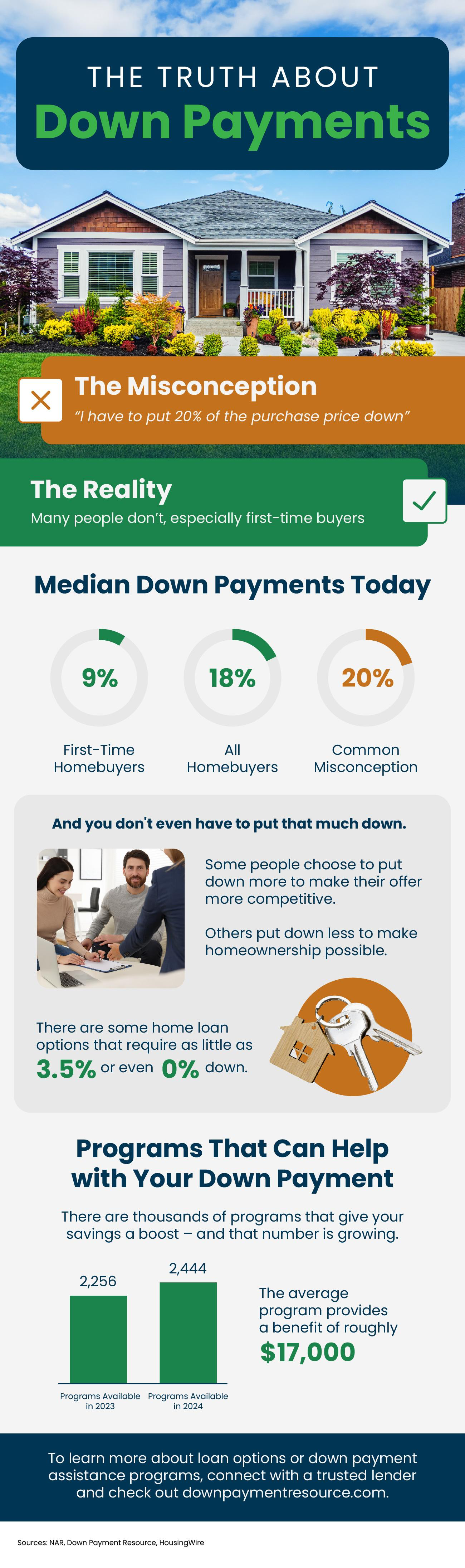
Saving for your down payment is likely top of mind. But how much do you really need? A common misconception is that you have to put down 20% of the purchase price. But that’s not necessarily the case. Unless it’s specified by your loan type or lender, you don’t have to. There are some home loan options that require as little as 3.5% or even 0% down. An article from The Mortgage Reports explains:

"The amount you need to put down will depend on a variety of factors, including the loan type and your financial goals. If you don’t have a large down payment saved up, don’t worry—there are plenty of options available . . ."

A trusted lender will go over the various loan types with you, any down payment requirements on those, and down payment assistance programs you may qualify for. The more you know ahead of time, the easier the process will be. And the key to getting the information you need is working with a pro to see what’ll work best for your situation.

2. Closing Costs

Make sure you also budget for closing costs, which are a collection of fees and payments made to the various parties involved in your transaction. Bankrate explains:

“Mortgage closing costs are the fees associated with buying a home that you must pay on closing day. Closing costs typically range from 2 to 5 percent of the total loan amount, and they include fees for the appraisal, title insurance and origination and underwriting of the loan.”

When it comes to closing costs, a trusted lender can guide you through specifics and answer any questions you may have. They can also give you a better idea of how much you should be prepared to pay so you can cruise through your closing with confidence.

And as you plan ahead for closing day, be sure to budget for your real estate agent's professional service fee too, in case the seller doesn't cover it. But don’t worry, you’ll work with your agent ahead of time to agree on what this is, so you won't be surprised at the finish line.

3. Earnest Money Deposit

And if you want to cover all your bases, you can also consider saving for an earnest money deposit (EMD). According to Realtor.com, an EMD is typically between 1% and 2% of the total home price and is money you pay as a show of good faith when you make an offer on a house.

But, it’s not an added expense. Instead, it works like a credit and goes toward some of your upfront costs. You’re simply using some of the money you’ve already saved for your purchase to show the seller you’re committed and serious about buying their house. Realtor.com describes how it works as part of your sale:

It tells the real estate seller you’re in earnest as a buyer . . . Assuming that all goes well and the buyer’s good-faith offer is accepted by the seller, the earnest money funds go toward the down payment and closing costs. In effect, earnest money is just paying more of the down payment and closing costs upfront.”

Keep in mind, this isn’t required, and it doesn’t guarantee your offer will be accepted. It’s important to work with a real estate advisor to understand what’s best for your situation and any specific requirements in your local area. They’ll advise you on what moves you should make so you can make the best possible decisions throughout the buying process.

Bottom Line

The key to a successful homebuying savings strategy? Being informed about what you need to save for. Because, when you understand what to expect, you can plan ahead. With an expert agent and a trusted lender, you’ll have the information you need to move forward with confidence.

Posted in For Buyers
Jan. 7, 2025

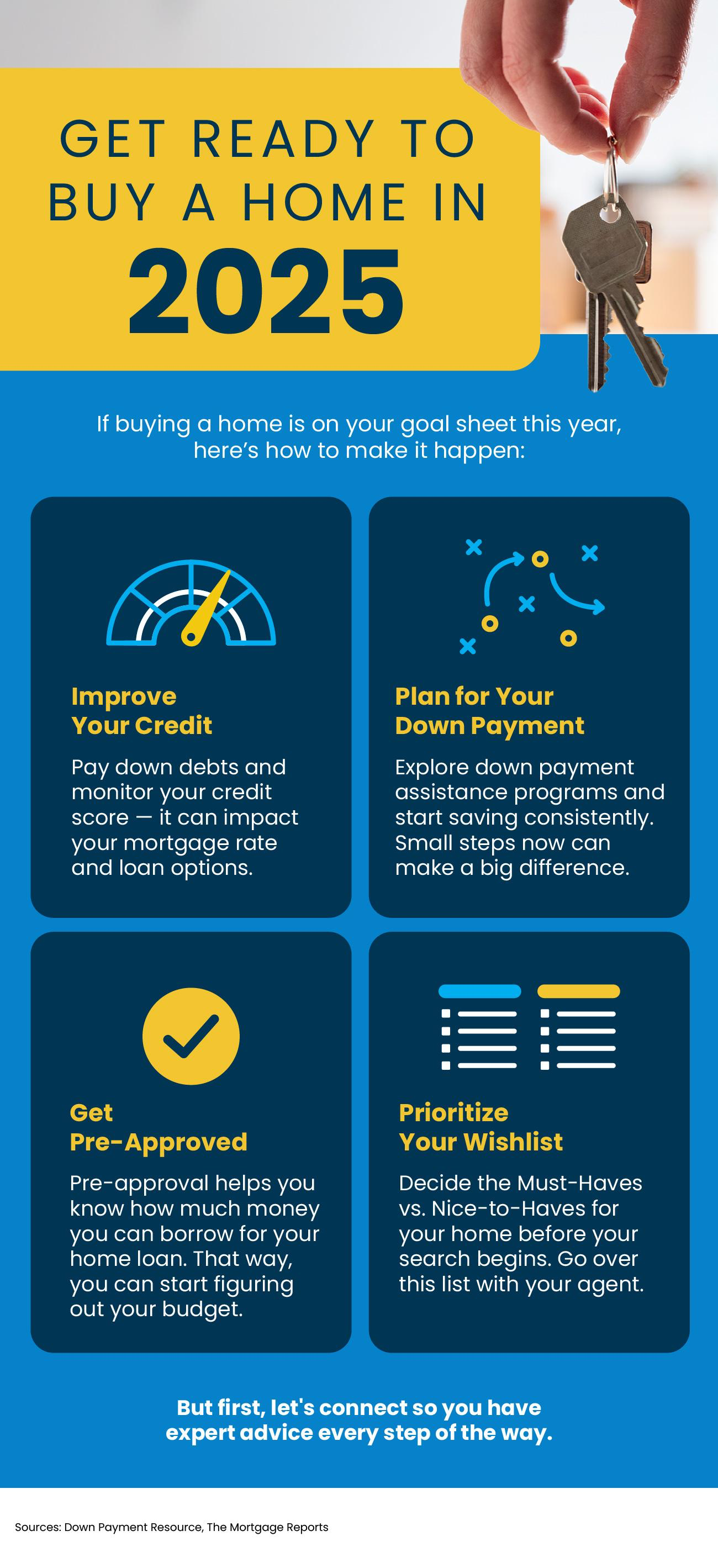
Get Ready to Buy a Home in 2025

If buying a home is on your goal sheet this year, here’s how to make it happen. Focus on improving your credit, planning for your down payment, getting pre-approved, and prioritizing your wish list. But first, let’s connect so you have expert advice every step of the way.


Posted in For Buyers
Jan. 6, 2025

Time in the Market Beats Timing the Market


Trying to decide whether it makes more sense to buy a home now or wait? There’s a lot to consider, from what’s happening in the market to your changing needs. But generally speaking, aiming to time the market isn’t a good strategy – there are too many factors at play for that to even be possible.

That’s why experts usually say time in the market is better than timing the market. 

In other words, if you want to buy a home and you’re able to make the numbers work, doing it sooner rather than later is usually worth it. Bankrate explains why: 

“No matter which way the real estate market is leaning, though, buying now means you can start building equity immediately.” 

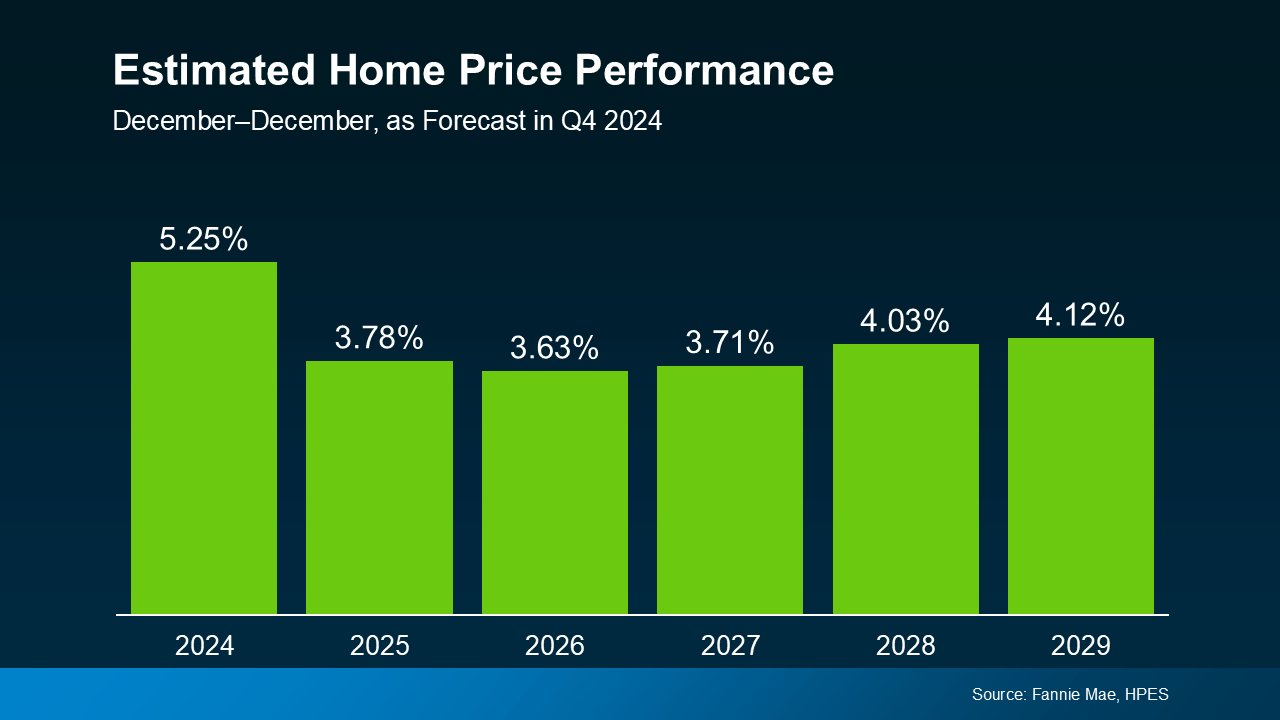
Here’s some data to break this down so you can really see the benefit of buying now versus later – if you’re able to. Each quarter, Fannie Mae releases the Home Price Expectations Survey. It asks over one hundred economists, real estate experts, and investment and market strategists what they forecast for home prices over the next five years. In the latest release, experts are projecting home prices will continue to rise through at least 2029 – just at a slower, more normal pace than they did over the past few years (see the graph below):

a graph of a number of green rectanglesBut what does that really mean for you? To give these numbers context, the graph below uses a typical home value to show how it could appreciate over the next few years using those HPES projections (see graph below). This is what you could start to earn in equity if you buy a home in early 2025. 
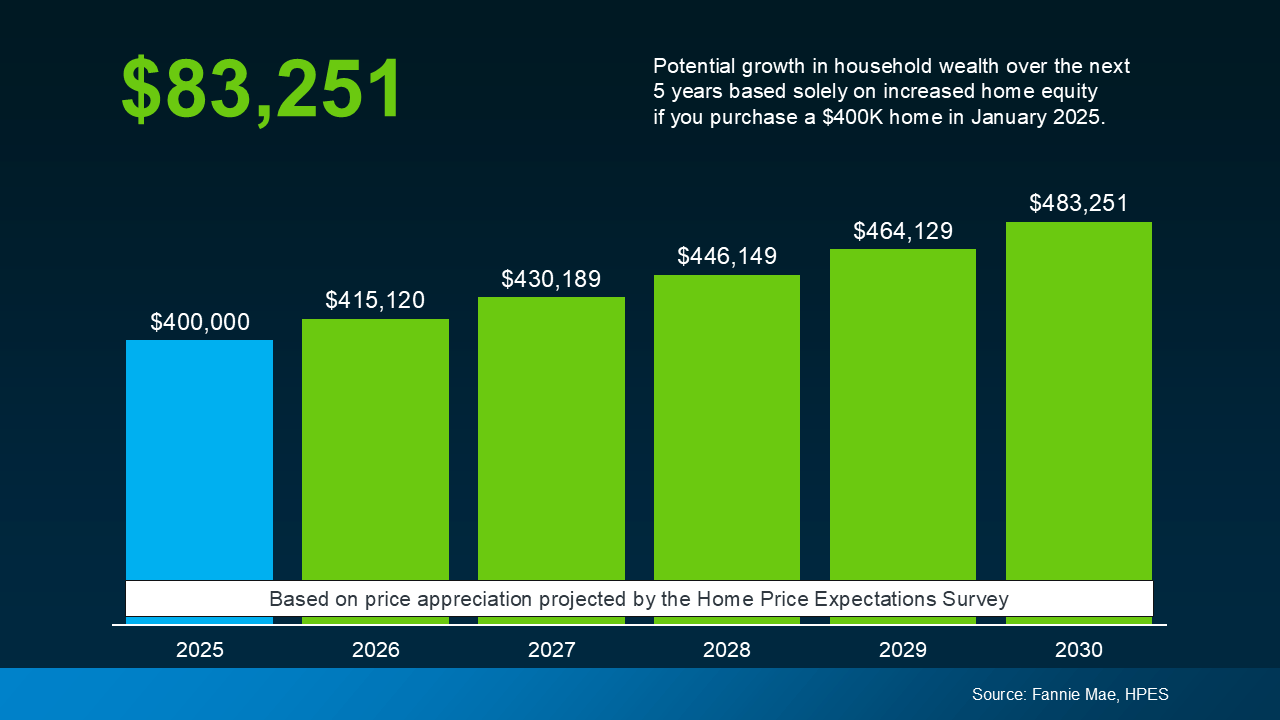
a graph of growth of a houseIn this example, let’s say you go ahead and buy a $400,000 home this January. Based on the expert forecasts from the HPES, you could gain more than $83,000 in household wealth over the next five years. That’s not a small number. If you keep on renting, you’re losing out on this equity gain.
And while today’s market has its fair share of challenges, this is why buying is going to be worth it in the long run. If you want to buy a home, don’t give up. There are creative ways we can make your purchase possible. From looking at more affordable areas, to considering condos or townhomes, or even checking out down payment assistance programs, there are options to help you make it happen.

So sure, you could wait. But if you’re just waiting it out to perfectly time the market, this is what you’re missing out on. And that decision is up to you.

Bottom Line

If you’re torn between buying now or waiting, don’t forget that it’s time in the market, not timing the market that truly matters. Let’s connect if you want to talk about what you need to do to get the process started today.

Posted in For Buyers
Dec. 26, 2024

What’s Motivating More Buyers To Choose a Newly Built Home?


Planning to buy a home soon? Why not go for something brand-new? Because data shows a lot more buyers are seeing the appeal of new home construction these days – and you may find out it’s what you want too.

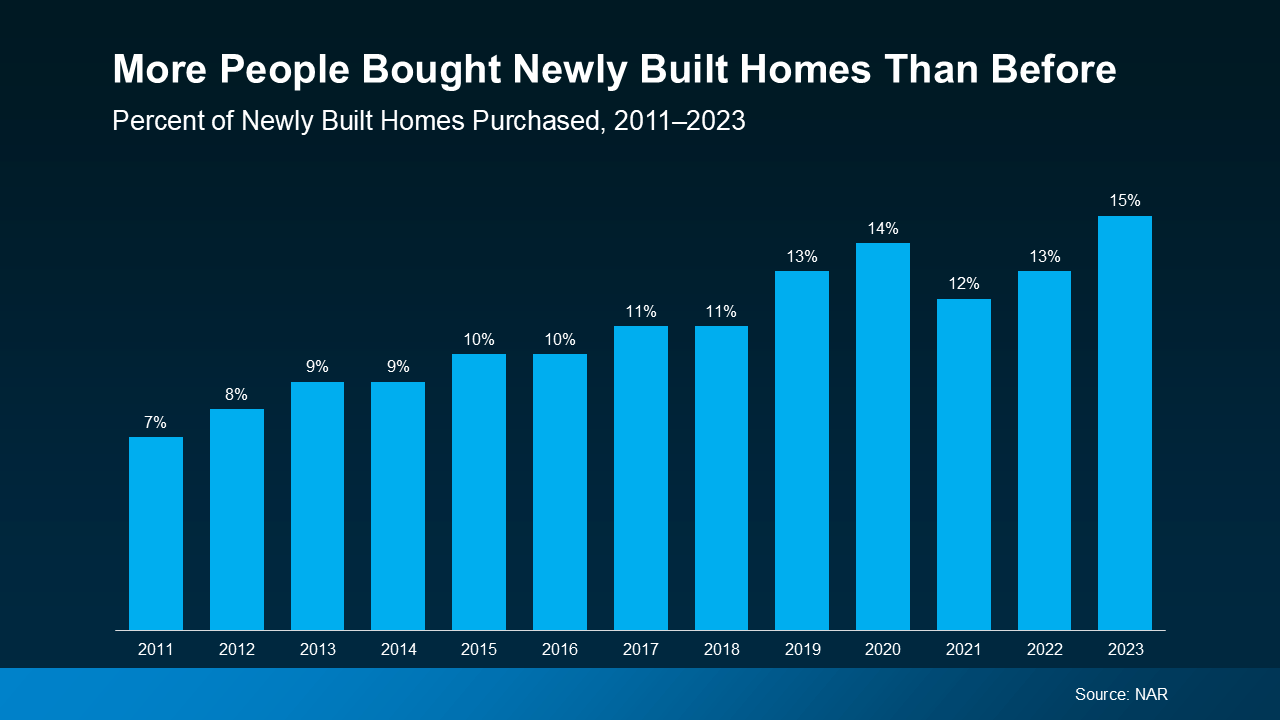
The National Association of Realtors (NAR), explains that newly built homes accounted for 15% of all homes sold last year. That’s a significant increase, and is actually the highest percentage in 17 years (see graph below):

a graph of blue barsTo get a closer look at why so many people are opting for a brand-new home, NAR surveyed recent buyers. And here are the top reasons why new builds gained so much popularity (see graph below):

a graph of blue squares Avoiding Renovations or Problems with Plumbing or Electricity (42%)

According to buyers, the number one benefit is the peace of mind that comes with getting brand-new everything. Because let’s face it, buying a home right now is pricey. And with inflation also putting a pinch on your wallet, you want to do everything you can to cut down on any additional costs. Enter new builds.

A home that was just built is less likely to have unexpected repairs, and that means less maintenance you’ll need to budget for upfront. Plus, since many builders include warranties on their homes, that’s an added layer of protection for your wallet on some of the home’s major systems.

Ability To Choose and Customize Design Features (27%)

You may also get the chance to personalize parts of the build to your unique tastes. That can be as small as which knobs go on the cabinets and which light fixture goes in the dining room to as big as floor plans and siding color. So, if you’re not finding a home you like, it may be time to build one.

The Amenities of New Home Construction Communities (25%)

Many new developments also offer amenities like parks, pools, fitness centers, and community spaces. These features could help you feel more connected to your neighborhood and can be a great perk for your lifestyle.

Lack of Inventory of Previously Owned Homes (15%)

Since the supply of existing homes (homes that were previously lived in) is still lower than the norm, more people are asking their agents if they can see what builders have available – and builders aren’t disappointing. Right now, new builds make up a larger portion of the homes available for sale than the norm. So, checking out these homes can really open up your pool of options. And don’t worry – builders are not overbuilding. They’re just catching up after years of underbuilding.

Energy Efficiency (14%)

Not to mention, newly built homes usually have the latest energy-efficient materials and technologies. This not only feels good, but can also lead to lower utility bills and a reduced environmental footprint. In a U.S. News Real Estate interview with Kevin Morrow, Senior Program Manager at the National Association of Home Builders (NAHB), this topic came up:

“The more energy-efficient mechanics of the house also help reduce utility bills for new home buyers . . . Newly-constructed homes often include green systems and appliances—like high efficiency stoves, refrigerators, washing machines, water heaters, furnaces, or air conditioning units—that homes built years ago might not.”

Smart Home Features (11%)

And last on this list is the integration of smart technologies. Tech-savvy buyers often want the latest and greatest advancements – and new home construction usually delivers.

The Importance of Using Your Own Agent

Newly built homes are becoming a top pick for buyers these days, and it’s easy to see why. If you’re feeling motivated to see what’s out there, just remember you need to have your own real estate agent.

Builder contracts often have some complex terms and complicated fine print. If you bring your own agent, you’ll have someone to advocate for you, make sure you’re getting quality construction, and guide you through the process from start to finish. 

Bottom Line

Imagine skipping the hassle of renovations and having the freedom to pick out the exact design features you want. If this sounds good to you, let’s connect to make sure you’ve got your own agent to help you negotiate with the builder so you can buy a new home with confidence.

Posted in For Buyers
Dec. 25, 2024

The Personal Joys of Having a Home To Call Your Own


There’s no doubt that owning a home comes with significant financial benefits. And this time of year is a great time to reflect on the other reasons why owning a home is so meaningful.

A house is more than four walls and a roof – it’s a place where memories are made, connections are built, and life happens.

From the sense of accomplishment that comes with owning your own home to the joy of creating a space that’s uniquely yours, the emotional connections we have to our homes can be just as important as the financial ones. 

Here are some of the things that turn a house into a happy home.

1. It’s an Accomplishment You Can Be Proud Of

Buying a home is a significant milestone, whether it’s your first or your fifth. You’ve worked hard to make it happen and achieving this goal is a reason to celebrate. There’s nothing quite like stepping through the door of a home that’s yours and knowing you’ve accomplished something truly special.

2. It’s a Place You Can Call Your Own

Compared to renting, owning a home can give you a much greater sense of security and privacy. It’s your own place – not your landlord’s – and that just feels different. No one else has the keys but you and that gives you your own personal safe place to retreat to at the end of a long day.

3. It’s a Space That’s Yours To Customize

Owning a home means you have the freedom to personalize it however you like. While there can be HOA guidelines you may have to follow depending on where you buy, you can still make it a reflection of your style and create a space that feels just right for you. As Freddie Mac explains:

“As the homeowner, you have the freedom to adopt a pet, paint the walls any color you choose, renovate your kitchen, and more. You can customize your own space without approval from landlords.”

4. It’s a Foundation for Building a Sense of Community

Homeownership often means putting down roots in a neighborhood and becoming a part of the local community. According to groups like Habitat for Humanity, owning a home increases your interest in getting involved with your neighbors and local organizations. Whether it’s through joining a neighborhood group, volunteering, or simply getting to know the people next door, a home is a great foundation for building meaningful connections.

Bottom Line

Owning a home is about so much more than financial benefits – it’s about the pride, well-being, and sense of belonging it can bring. When you’re ready to take the next step toward buying a home, let’s connect.

Posted in For Buyers, For Sellers
Dec. 24, 2024

The #1 Reason People Move: To Be Closer to Family and Friends


Have you ever thought about packing up and moving to be closer to the people who mean the most to you? Maybe you’re tired of long drives to see your family or wish your kids could spend more time with their grandparents. Clearly, a lot of other people feel the same way.

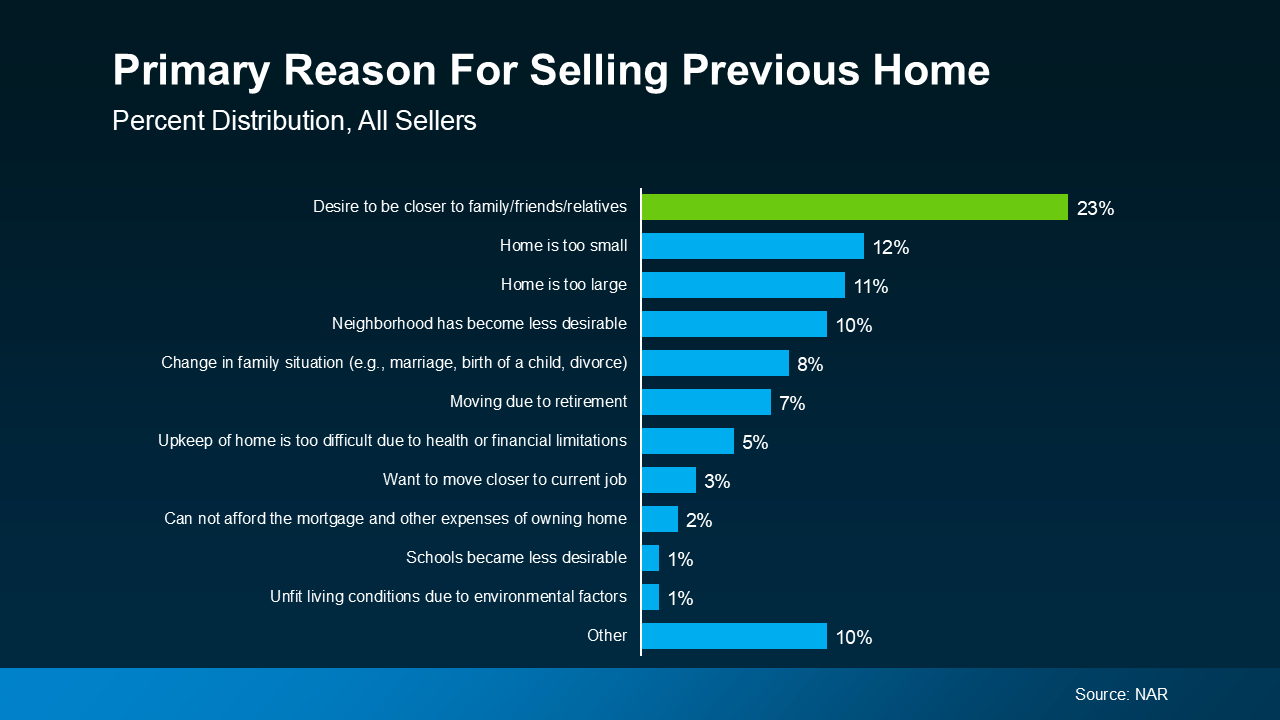
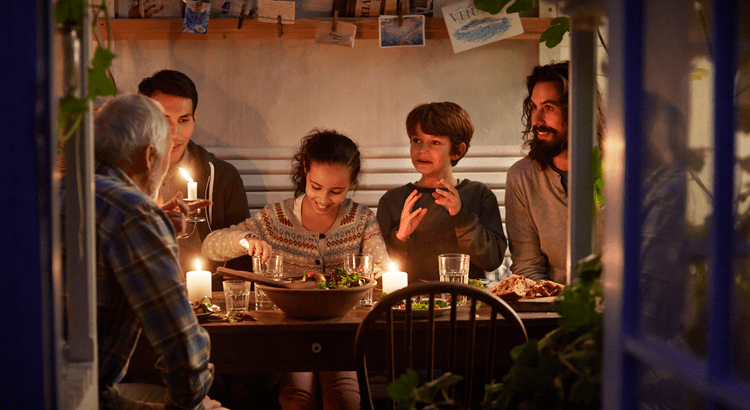
According to recent data from the National Association of Realtors (NAR), the desire to be near family and friends is the #1 reason people move (see graph below):

a screen shot of a graphThat’s because moving isn’t just about finding a new house – it’s about living a life where you’re surrounded by the people who matter most. Whether it’s catching up over weeknight dinners, watching your kids play with their cousins, or just knowing someone’s there when you need them, living near loved ones changes everything.
Let’s dive into why so many people are making this move and how it could be the best decision for you, too.

Why Family Comes First

Living near family and friends is a universal motivator that cuts across all types of buyers, whether you’re buying your first home or making a big lifestyle change.

But it’s especially important to repeat buyers. Unlike first-time homebuyers, who may be more focused on looking in more affordable areas, repeat buyers often have more flexibility on where they live. Many Baby Boomers, for example, have built significant equity in their homes, giving them the freedom to prioritize what matters most – like retiring near their grandkids. As Ali Wolf, Chief Economist at Zonda, says:

“25% of Baby Boomer households plan to retire near their children and grandchildren . . .”

Making a move to be closer to friends and family is all about creating a meaningful next chapter in your life where loved ones are just around the corner.

The Benefits of Living Near Loved Ones

But moving closer isn’t just a lifestyle choice – it’s a decision that offers real benefits:

  1. Spending More Time Together Whether it’s joining family dinners, going to weekend activities, or simply having someone nearby to talk to, these moments strengthen relationships and make life more fulfilling.
  2. Sharing Resources Living close to family can provide practical advantages, too – like sharing childcare, tools, or household items.
  3. Cutting Down on Travel Instead of spending hours on the road to spend time together, you can enjoy more spontaneous visits. This not only enhances your quality of life, but it also provides peace of mind in case of emergencies.
  4. Being There for Big Moments It also offers both emotional and practical support during life’s milestones. From graduations to tough times, being close to loved ones helps you feel connected and cared for.

Ready To Make Your Move?

At the end of the day, home isn’t just a place you live – it’s where your people are. Whether you’re looking to spend more quality time with family or enjoy the practical benefits of being closer to loved ones, the decision to move closer to those you care about is a deeply personal one.

Bottom Line

If you’re thinking about making a change, let’s connect. Together, we can explore neighborhoods that bring you closer to the people and places you love most.

Posted in For Buyers, For Sellers
Dec. 20, 2024

The Real Truth About Down Payments

Dec. 19, 2024

Struggling To Sell Your House? Read This.


When you sell your house, ideally, you want it to go something like this: your house sells for top dollar, you get it sold quickly, and it all goes down without a hitch.

But what many people don’t realize is that even in today's market where there are more buyers than homes for sale, there are still things that can cause delays or even keep a house from selling. According to Zillow, in 2024, as many as 1 in 3 sellers took their home off the market before it ultimately sold. 

And while the reasons those houses didn’t sell are going to vary, there are some general themes that come through. If you’re having trouble getting your house sold, here are the top three hurdles that could be getting in the way, and how an expert agent can help you solve these issues.

1. Priced Too High

It’s no surprise that price plays a major role when you sell. And in today’s market, overpricing a home in a high-mortgage rate environment is the biggest thing keeping homes on the market longer than the norm. As. U.S. News Real Estate says:

“Talk to any real estate expert, and the first thing they’ll tell you is that a house is selling slowly because the price is too high."

While it’s tempting to push the price higher to get more for your home, overpricing can really turn away potential buyers. It can also make your house sit on the market for far too long. And the longer it sits, the more skeptical buyers will be that there’s something wrong, even if there isn’t.

Not to mention, buyers today have so many tools and resources to view homes in your area and compare prices. So, if your house is priced too high, you’ll risk driving away potential offers.

To find out if this is happening with your listing, talk to your agent about what they’re hearing at open houses and showings. If the feedback is consistent, it may be time to re-evaluate your asking price. 

2. Not Freshened Up Before Listing

You only get one chance to make a great first impression on a buyer. That’s why sprucing up your house can be the difference between it selling or sitting.

First, take into account your home’s curb appeal. There may be easy ways you can clean up the landscaping to make it tidy, inviting, and really make an impact. As an article from Realtor.com notes:

" . . . for better or worse, buyers do tend to judge a book by its cover. You want to make sure potential buyers’ first impression of your home is a good one—and inspires them to stop by the open house or schedule a tour—so they can see more."

But don’t stop at the front door. Small touches like removing personal items, reducing clutter, and cleaning the floors give buyers more freedom to picture themselves in the home. And inexpensive upgrades like a fresh coat of paint or updated listing photos to match the current season can go a long way with that wow factor. 

When in doubt, lean on your real estate agent for expert advice and whether you need a new game plan to close the deal.

3. Limited Access

Another big mistake you can make as a seller is limiting the days and times that buyers can view your house. Because at the end of the day, if buyers can’t take a look around, your chances of selling decline — drastically.

And here’s something else to consider. No matter what type of market you’re dealing with, buyers from outside the area are often highly motivated, but they don’t have as much flexibility or time as those who are local. So, give your house the best visibility by making it available as much as possible.

Bottom Line

You deserve to check selling your house off your list of goals this year. So, if your house isn’t getting enough attention or your listing is getting stale, don’t be afraid to ask your trusted real estate agent how you can revamp your approach. 

Posted in For Sellers
Dec. 17, 2024

More Starter Homes Are Hitting the Market


More entry-level homes – also known as starter homes – are popping up on the market. And after several years with very few homes available to buy and prices rising, there are finally some more options for first-time buyers.

Inventory Is Increasing – Especially at Lower Price Points

Over the past year, the total supply of homes for sale has improved. According to Realtor.com, in November there were 26.2% more homes for sale compared to this time last year, marking 13 months of inventory growth and the most homes available since December of 2019.

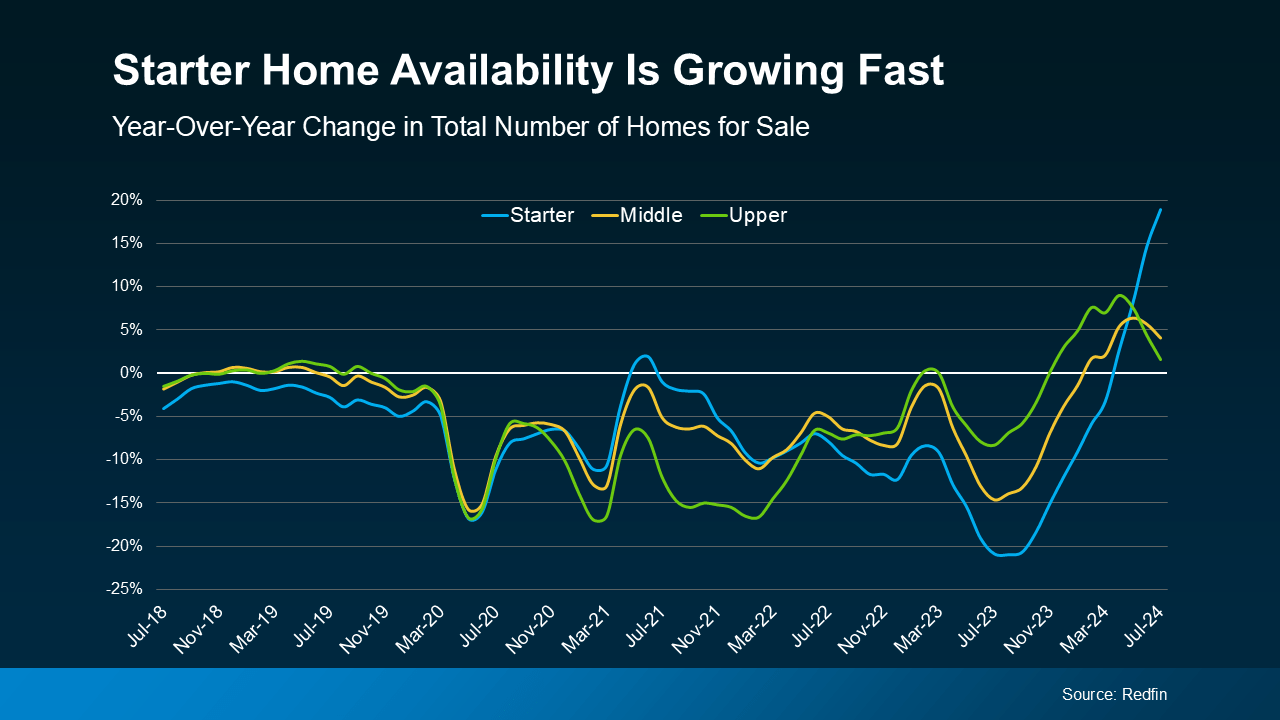
Interestingly, the growth isn’t spread evenly among all types of homes, though. According to Redfin, starter homes have seen the biggest increase (see graph below):

a graph of a number of homesSo, if you’re a first-time buyer who’s been sitting on the sidelines waiting because you thought you might never find a starter home in your market, this could be a game-changer. You finally have more options to choose from, and you just might be able to find one in your price range.

How an Experienced Agent Helps You Find a Starter Homes 

Finding the right starter home at the right price point in your local market might feel like an unthinkable challenge, but a local real estate agent makes it easier. They stay up to date on the latest starter home listings in your area, so you don’t miss any opportunities.

Your agent will help you focus on homes that match your budget and your needs, making the search less stressful. They’ll also guide you through how to make the right offer and negotiate to get the best outcome possible.

On top of that, they handle the important details, like documentation and deadlines, so you can stay right on track. And if you have questions, your agent is there with answers and expert advice every step of the way.

Bottom Line

Starter homes are making a bit of a comeback, and this could be your chance to find one. Whether you’re ready to visit listings, need advice, or just want to see what’s out there, let’s connect.