Recent Blog Posts:

Sept. 26, 2024

Don’t Fall for These Real Estate Agent Myths


When it’s time to buy or sell a home, one of the most important decisions you’ll make is who you’ll work with as your agent. That choice will have an impact on your entire experience and how smoothly it goes.

As you figure out who you’ll partner with, it’s important to know what to expect and what to look for. Unfortunately, there may be some myths holding you back from making the best decision possible. So, let’s take some time to address those, and make sure you have the information you need to find the right agent for you.

Myth #1: All Real Estate Agents Are the Same

You might think all agents are the same – so it doesn’t matter who you work with. But, in reality, agents have varying levels of experience, specialties, and market knowledge, which can have a big impact on your results. For example: you'll get much better service and advice from someone who is a true expert in their field. As Business Insider explains:

“If you were planning to get your hair done for a special event, you'd want to visit a stylist who specifically has experience doing that type of work — you wouldn't make an appointment with someone who primarily does kids' hair. The same concept applies to finding a real estate agent. If you have a smaller budget, you probably don't want to work with an agent who exclusively sells multimillion-dollar properties.”

Take some time to talk with each agent you’re considering. Ask about their experience level and what they specialize in. This will help you find the one that’s the best fit for your search.

Myth #2: You Can Save Money by Not Using an Agent

As a seller, you may think you can save money by not working with a pro. However, the expertise, negotiation skills, and market knowledge an agent provides generally saves you money and helps you avoid making costly mistakes. Without that guidance, you could find yourself doing something like overpricing your house. And that’s a misstep that’ll cost you when it sits on the market for far too long. That’s why U.S. News Real Estate says:

When it comes to buying or selling your home, hiring a professional to guide you through the process can save you money and headaches. It pays to have someone on your side who's well-versed in the nuances of the market and can help ensure you get the best possible deal.”

Myth #3: Agents Will Push You To Spend More

You may also be worried an agent will push you to buy a more expensive house in order to increase their commission. But that’s not how that should go. A good agent will respect your budget and work hard to find a home that truly fits your financial situation and needs. With their market know-how, they’ll point you toward the best option for you, rather than try to pad their own pockets on your dime. As NerdWallet explains:

“Among other things, a good buyer’s agent will find homes for sale. A buyer's agent will help you understand the type of home you can afford in the current market, find listed homes that match your needs and price range, and then help you narrow the options to the properties worth considering.”

Myth #4: Market Conditions Are the Same Everywhere, So Why Do I Need a Pro?

Maybe you believe housing market conditions are the same no matter where you are. But that couldn’t be further from the truth. Real estate markets are highly localized, and conditions can vary widely from one area to another. This is why you can’t pick just anyone you find online. You should choose an agent who’s an expert on your specific local market. As a recent article from Bankrate says:

Real estate is very localized, and you want someone who’s extremely knowledgeable about the market in your specific area.”

You’ll know you’ve found the right person when they can explain the national trends and how your area stacks up too. That way you’re guaranteed to get the full picture when you ask: “how’s the market?”

Bottom Line

Don’t let myths keep you from the expert guidance you deserve. With market knowledge and top resources, a trusted local real estate agent isn't just helpful, they’re invaluable.

In what could be one of the biggest financial decisions of your life, having the right pro by your side is a game changer. Let’s connect and make sure you get the best outcome possible.

Posted in For Buyers, For Sellers
Sept. 25, 2024

Why Buying Now May Be Worth It in the Long Run


Should you buy a home now or should you wait? That’s a question a lot of people have these days. And while what’s right for you is going to depend on a lot of different factors, here’s something you’ll want to consider as you make your decision.

As soon as you buy, you’ll start gaining equity. And you’d be surprised how quickly that can add up – even with more moderate home price appreciation.

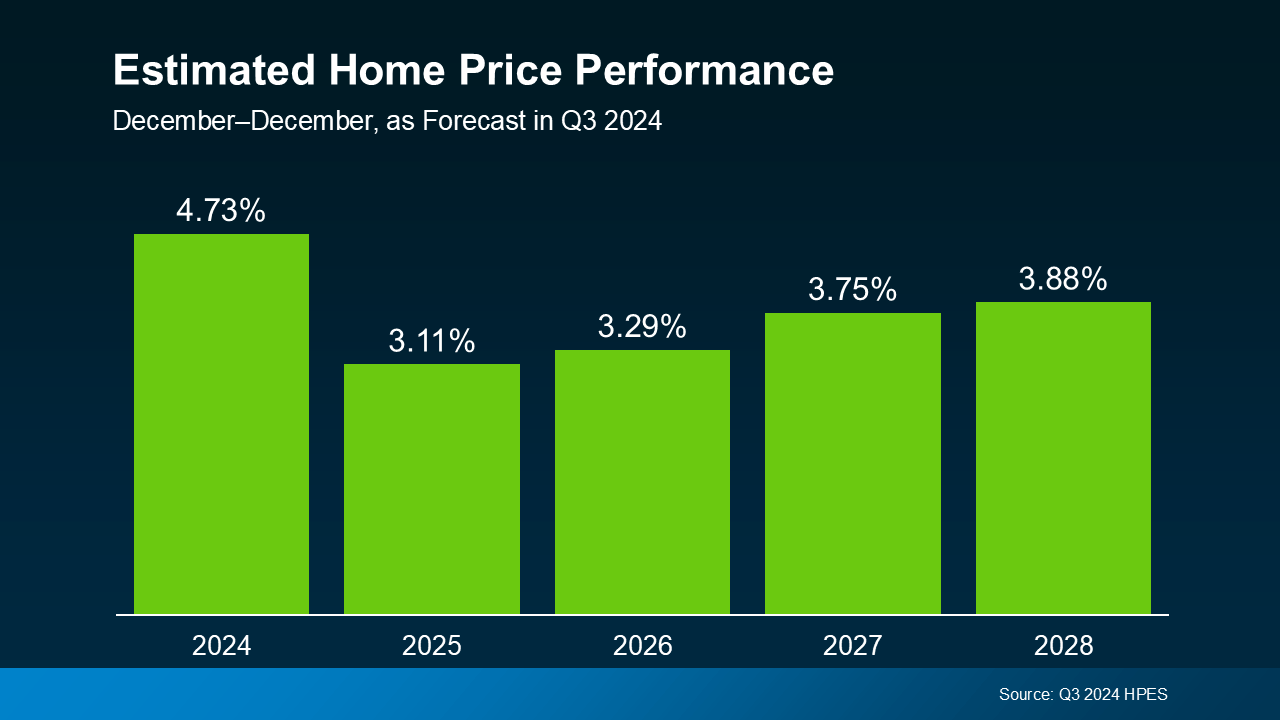
Each quarter, Fannie Mae releases the Home Price Expectations Survey. It asks over one hundred economists, real estate experts, and investment and market strategists what they forecast for home prices over the next five years. In the latest release, experts project prices will continue to rise nationally through at least 2028 (see the graph below):

No Caption ReceivedWhile home prices are going to vary from one local area to the next, this shows they’re expected to keep going up nationally. The size of the increase varies from year-to-year, but the important takeaway is that prices are forecast to rise every single year – just at a moderate pace.
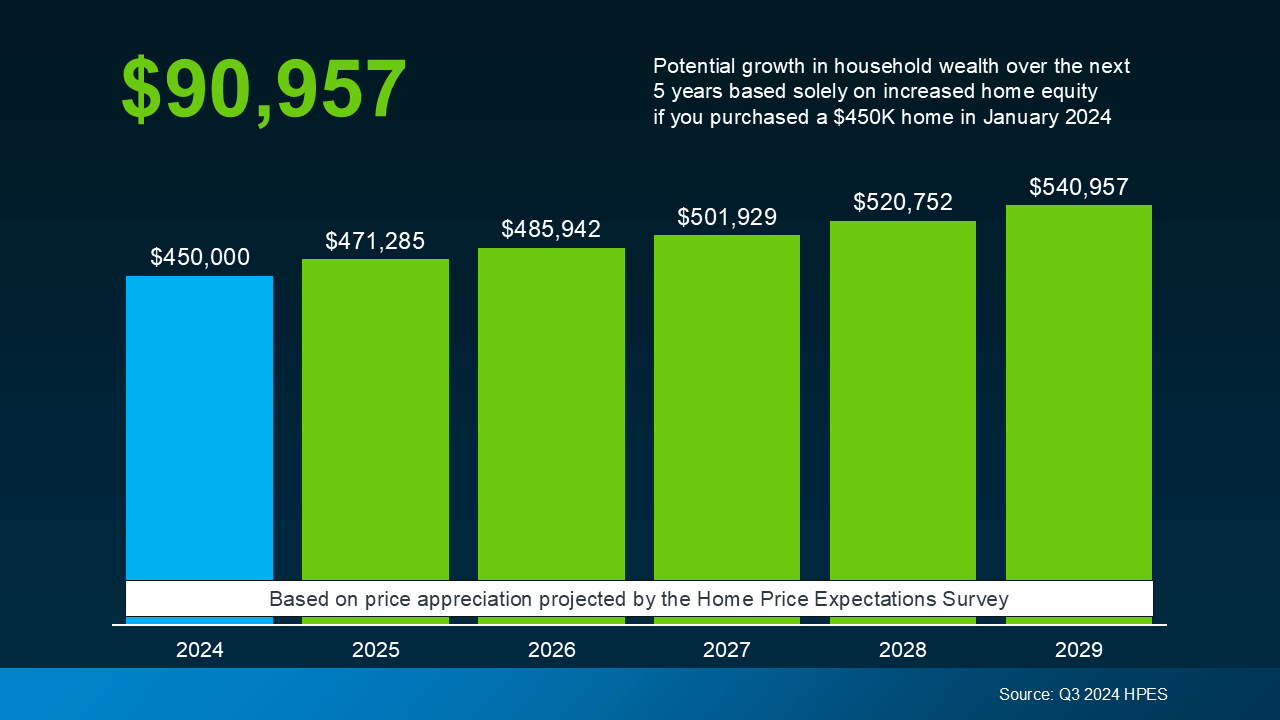
And while rising home prices may not sound great right now, once you own a home, that growth will be a big bonus for you. Here’s a look at what you stand to gain equity-wise once you buy. The graph below uses a typical home’s value and those HPES projections to show how much equity is at stake:

No Caption ReceivedIf you bought a $450,000 home at the beginning of this year, based on that starting value and the expert forecasts from the HPES, you could gain more than $90,000 in household wealth over the next five years. That’s significant.


So, if you’re ready and able to buy, and growing your wealth is important to you, you’ve got an opportunity in front of you. And now that mortgage rates have fallen, it may be time to consider making a move.

To talk more about your options and what makes sense, lean on a pro. They’ll be able to tell you what home prices are doing in your area and what that means for your move (and your future equity). The Mortgage Reportssays:

“Given the intricacies of the current market, it’s more important than ever to stay informed and up to date about housing market conditions. Whether you’re looking to buy or sell in the remaining months of 2024, having a professional guide you through the process can make all the difference.” 

Bottom Line

The decision to buy now or wait is a very personal one, but it’s valuable to have an expert’s perspective. They won't push you, but they will explain things you may not have considered, like the equity that’s at stake.

If you want help weighing your options and thinking through how the current market factors in, let’s connect.

Sept. 24, 2024

The Best Time To Buy a Home This Year


A shift is underway in the housing market this season. And if you’ve been sitting on the sidelines waiting for the right moment to jump back into your homebuying search, this is a great time to do it. That’s because the best week to buy a home this year is just around the corner. Your sweet spot is here.

 The experts at Realtor.com study seasonal trends to figure out the ideal week for homebuyers:

Nationally, the best time to buy in 2024 is the week of Sept. 29–Oct. 5. This week historically has shown the best balance of market conditions that favor buyers. Inventory tends to be high, prices are below peak levels, demand is waning, and the pace of the market slows to a more manageable speed.” 

In addition to the historical trends and typical seasonality that Realtor.com looks at, there are also clear indicators in today’s market data that you’ll see better conditions right now than you would have over the last few years.

Mortgage rates just hit their lowest point in 19 months, and that goes a long way to help with your purchasing power and affordability. Andy Walden with Intercontinental Exchange Inc. (ICE) points out:

“Recent easing in mortgage rates brought some much-sought relief to prospective homebuyers. Along with a general cooling in home price growth, rates falling below 6.5 percent made August the most affordable month for housing since February.”

And Ralph McLaughlin, Senior Economist at Realtor.com, explains that it’s not just rates that have improved – inventory has too: 

“The number of homes actively for sale continues to be elevated compared with last year, growing by 35.8%, a 10th straight month of growth, and now sits at the highest since May 2020.”

That should give you more options. At the same time, sellers now have to compete with each other for your attention. That means they’ll be more likely to negotiate because they know their house will sit on the market longer if they don’t. As Zillow says:

Buyers waiting on the sidelines could find that early fall presents a ‘sweet spot,’ where there’s less competition from other buyers, more motivated sellers and lower interest rates to finance their purchases.”

Bottom Line

If you want to make sure you’re ready to take advantage of this sweet spot, let’s connect and start the prep work now. Maybe it’s time to get off the sidelines and into the action.

Posted in For Buyers, Home Prices
Sept. 23, 2024

Is Your House Priced Too High?


Every seller wants to get their house sold quickly, for as much money as they can, with as few headaches as possible. And chances are, you’re no different.

But did you know one of the biggest things that could jeopardize your success is the asking price for your home? Pricing your house correctly is one of the most crucial steps in the selling process.

So, how do you know if you’re missing the mark? Here are four signs your high asking price might be turning potential buyers away—and why leaning on your real estate agent is the best way to course correct.

1. You’re Not Getting Many Showings or Offers 

One of the most obvious signs your house may be overpriced is a lack of showings. If it's been on the market for several weeks and only a few buyers have come to see it—or worse, you haven’t gotten any offers—it could be a clear indication the price isn’t matching up with what buyers expect. Because buyers who have been looking for a while can easily spot (and write off) a home that seems overpriced.

Your real estate agent will coach you through this, so lean on their experience for what you may want to try to bring more buyers in, including considering a price cut.

2. Buyers Have Consistent Negative Feedback after Showings

And if after the showings you do have, comments from the potential buyers aren’t great, you may need to course correct. Feedback from showings is an important part of understanding how buyers see your house. If they consistently say it's overpriced compared to other homes they’ve seen, it’s time to reconsider your pricing strategy.

Your agent will gather and analyze this feedback for you, so you can look at how your house stacks up in the market. They can also suggest specific improvements or staging changes to better justify your asking price, or recommend one that aligns with today’s buyer expectations. As the National Association of Realtors (NAR) explains:

“Based on all the data gathered, agents may make adjustments to the initial price recommendation. This could involve adjusting for market conditions, property uniqueness, or other factors that may impact the property's value.”

3. It’s Been on the Market for Too Long

And that lack of interest is ultimately going to lead to it sitting on the market without any serious bites. The longer it lingers, the more likely it is to raise red flags for buyers, who may wonder if something is wrong with it. Especially in today’s market with growing inventory, a long listing period means your house is stale – and that makes it even harder to sell.

Your real estate agent will be able to give you perspective on how quickly other homes in your area are selling and walk you through what’s working for other sellers. That way you can decide together if there’s something you want to do differently. As a Bankrate article says:

“Check with your agent about the average number of days homes spend on the market in your area. If your listing has been up significantly longer than average, that may be a sign to reduce the price.”

4. Your Neighbor’s House Sold Without an Issue

And here’s the last one to watch out for. If similar homes in your area are selling faster than yours, it’s a clear sign that something is off. This could be due to things like a lack of upgrades, outdated features, or a less desirable location. Or, it may be priced too high.

Your agent will keep you up to date on your competition and what changes, if any, you need to make your home more competitive. They’ll offer advice on small updates that could increase your home’s appeal or how to adjust your strategy to reflect the reality of the market today.

Bottom Line

Pricing a home correctly is both an art and a science. It requires a deep understanding of the market and buyer psychology. And when the price isn’t drawing in buyers, there’s no better resource than your agent on what you may want to do next. 

Sept. 20, 2024

Lower Mortgage Rates Boost Your Buying Power

Sept. 19, 2024

Falling Mortgage Rates Are Bringing Buyers Back


If you’ve been hesitant to list your house because you’re worried no one’s buying, here’s your sign it may be time to talk with an agent.

After months of high rates keeping buyers on the sidelines, things are starting to shift. Rates are already coming down due to a number of economic factors. And yesterday the Federal Reserve cut the Federal Funds Rate for the first time since they began raising that rate in March 2022. And while they don’t control mortgage rates, this sets the stage for mortgage rates to fall even further than they already have – especially since more cuts from the Fed are expected into next year. And lower mortgage rates are bringing more buyers back into the market. Lisa Sturtevant, Chief Economist at Bright MLS, says:

“A drop in the cost of borrowing will help fuel more homebuyer demand . . . Falling rates will also bring more sellers into the market.”

The best part? You can take advantage of that renewed buyer interest.

As Rates Fall, Buyer Activity Goes Up

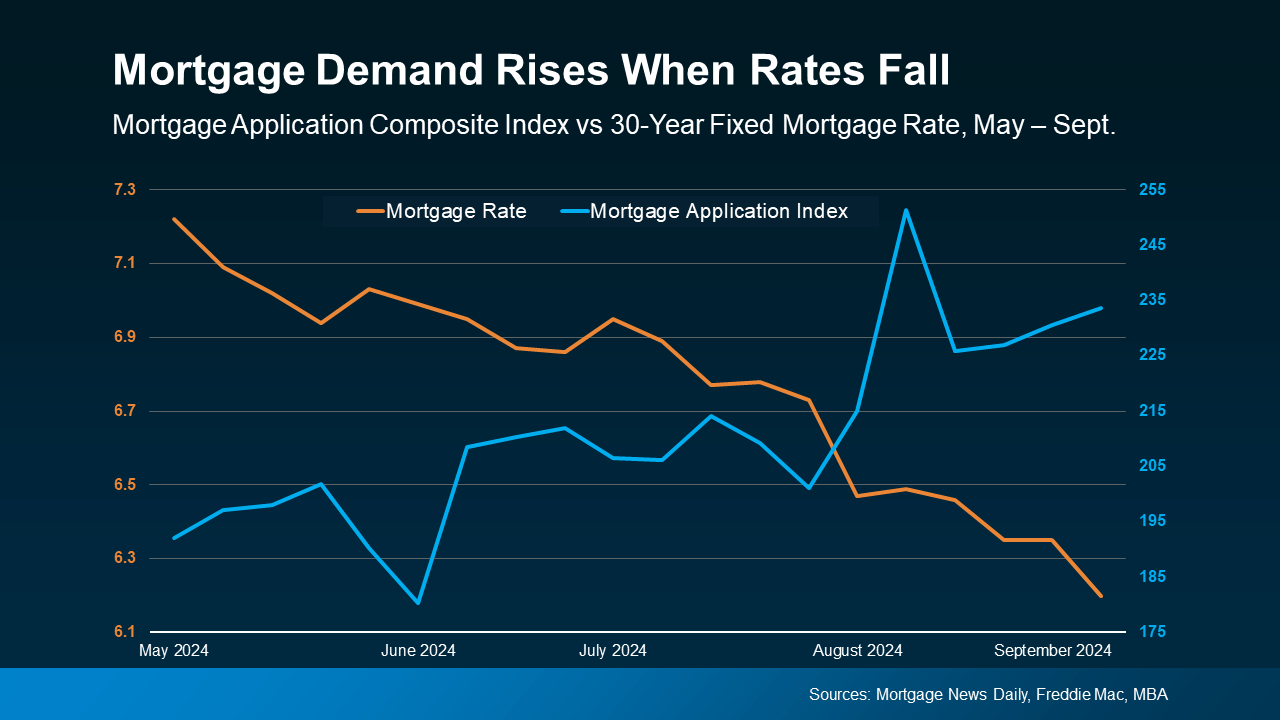
The graph below illustrates the relationship between falling mortgage rates and rising buyer activity. The orange line represents the average 30-year fixed mortgage rate, while the blue line shows the Mortgage Bankers Association (MBA) Mortgage Application Index, which tracks the number of mortgage applications.

As you can see, as mortgage rates (orange) come down, the Mortgage Application Index (blue) rises, showing more people start to re-engage in the process (see graph below):

What This Means for You

According to the National Association of Realtors (NAR), home sales increased in July, which was a welcome shift after four straight months of declines. If you're a homeowner thinking about selling, this uptick in buyer activity works in your favor.

More buyers means more competition, which can lead to higher offers and shorter time on the market for your house. And, according to Edward Seiler, AVP of Housing Economics at the Mortgage Bankers Association (MBA), this trend is expected to continue:

“MBA is expecting that slower home-price appreciation, coupled with lower rates, will ease affordability constraints and lead to increased activity in the housing market.”

All in all, the market is becoming more accessible to a wider range of buyers, which could result in even more people looking to purchase a house like yours.

With more buyers entering the market, now’s the time to start getting your house ready to sell.

Bottom Line

The recent decline in mortgage rates is already driving more buyers into the market, and experts project this trend will continue. Let’s work together to take advantage of this increased buyer demand and get your house ready to sell.

Sept. 19, 2024

Here are 4 ways the Federal Reserve's big rate cut could change the housing market

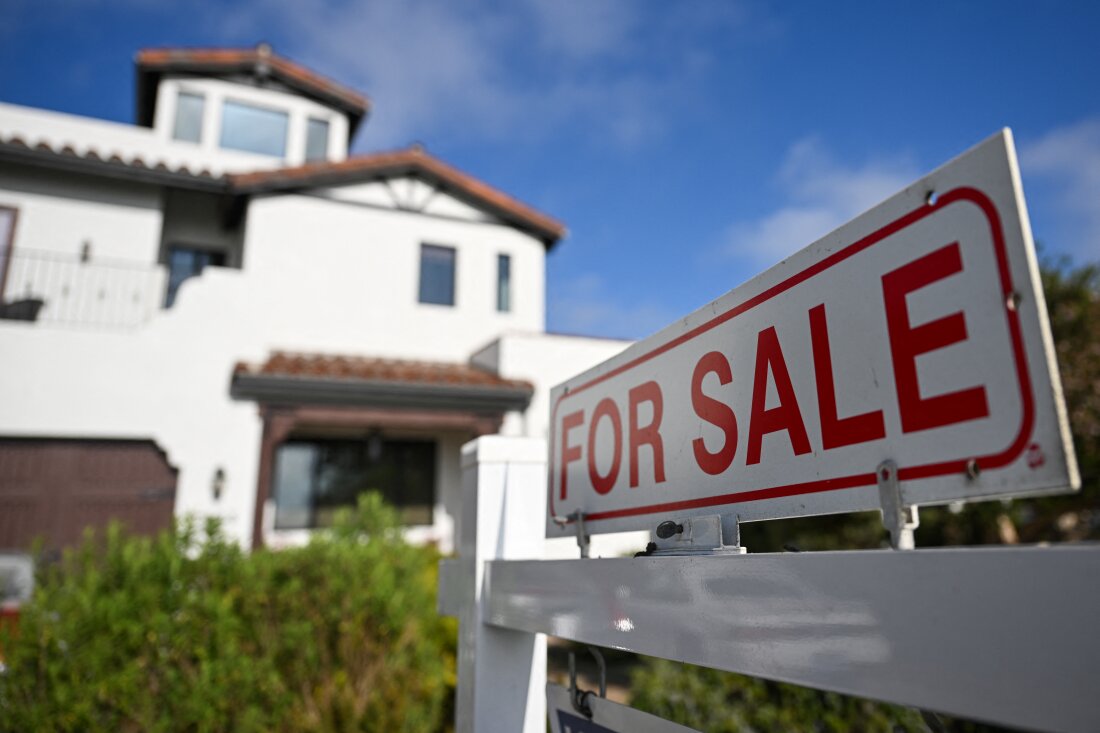
This photo shows a two-story white house for sale in Los Angeles in August 2024. A


Read the Article on NPR

After months of anticipation, the Federal Reserve cut interest rates on Wednesday by half a percentage point.

That will have an impact on the housing market — but it's unlikely to make a huge difference for those struggling to afford a home. 

Let's take a look.

Mortgage rates might not actually drop much further right now

Mortgage rates have been pretty high for the last couple of years, especially compared with the historic lows they reached during the peak of the COVID-19 pandemic.

Rates bottomed out below 3% for a 30-year fixed-rate mortgage during 2020 and 2021 when the pandemic led to lockdowns, but they then climbed to nearly 8% last year amid a robust economy and rising inflation.

But the prospect of rate cuts has already helped send mortgage rates lower, even before the Fed announced its actual decision on Wednesday. Long-term fixed-rate mortgage rates are now at 6.2%, the lowest since February 2023. (It's worth noting, though, that other factors besides the Federal Reserve's benchmark interest rate influence mortgage rates, including economic conditions.)

This means effectively that the rate cut announced by the Federal Reserve may already be priced in — though mortgage rates are bound to fall a little more given that policymakers have made clear they intend to continue cutting interest rates into next year.

Charlie Dougherty, a senior economist at Wells Fargo, expects mortgage rates to drop "marginally" after the Fed's rate cut on Wednesday. 

He and his colleagues forecast that the average rate on a 30-year fixed-rate mortgage will be about 6.2% by the end of this year — where it is now. 

But Dougherty expects the 30-year mortgage rate to fall closer to 5.5% by the end of 2025, still above pre-pandemic levels.

Lower mortgage rates could actually mean higher housing prices

Here's the thing: Lower mortgage rates may not make it easier to buy a home. In fact, it could make it more difficult and lead to higher home prices.

That's because lower mortgages are likely to lure more buyers back to the market, bringing in more competition for a limited supply of houses.

That's tough for first-time homebuyers. Kim Kronenberger, a real estate agent in the Denver area, says she worries for the would-be homebuyers who keep waiting for affordability to improve.

These buyers have struggled to find their first home as many were scared off by bidding wars during the low-interest-rate era — and then were rebuffed by high mortgage rates and still-high prices.

"A lot of those buyers, they absolutely have regret," she says of people who didn't buy a home at the start of the pandemic, when rates were low but home prices hadn't yet skyrocketed. "Because had they bought four years ago, they would have been in a whole different place than they are now."

Don Payne, a real estate agent in Columbus, Ohio, says there's more inventory of larger homes for homebuyers trading up: "Builders are building them, and existing homeowners have those too." 

The big problem is a lack of starter homes. 

"Folks are trying to get their first house, and there's a huge shortage on that," he says. 

Dropping interest rates could lead to more housing supply

A key reason for high home prices currently is the lack of housing supply: The U.S. is short millions of housing units. Supply has not kept pace with demand, especially as the large millennial generation is forming households and trying to buy homes.

High interest rates didn't help, making it harder for some homebuilders to get projects off the ground, especially smaller, private developers. That's because the rates on loans that builders get for acquisition, development and construction are closely tied to the rate set by the Fed. 

So this rate cut should make it easier for those developers to get building again.

This aerial photo shows completed and under-construction new homes in Trappe, Maryland, in 2022. Some of the completed homes have green lawns. The homes still under constructions are on dirt lots.

Completed and under-construction new homes are seen in Trappe, Md., in 2022. Lower interest rates and an expected bump in demand from buyers are likely to spur more homebuilding.

Jim Watson/AFP via Getty Images

The fact that lower mortgage rates are expected to spur more homebuyers to buy will also serve as an incentive for builders to get building.

That's good news for the supply side of the housing equation — more homes getting built and into the market will relieve some of the demand that pushes up prices. But, of course, it will take time for those homes to be completed.

Affordability will still be a big problem

Lower mortgage rates can certainly bring down a homebuyer's monthly mortgage payment. But when home prices are sky-high, it will still be hard for many people to find a home they can afford.

Dougherty, the Wells Fargo economist, says home prices have risen by about 50% since early 2020, faster than average household income growth during that time. 

"That has been a really big driver in terms of making housing out of reach for a lot of prospective buyers," he says.

During the pandemic, a huge number of homeowners refinanced their mortgages to take advantage of record-low rates. Nearly 60% of active mortgages now have rates below 4% — rates so low that those homeowners are unlikely to refinance again.

In fact, most homeowners are still going to be reluctant to sell their current home because they would face a higher mortgage rate today. Lower interest rates will somewhat reduce what's called the "lock-in effect," but they won't change homeowners' hesitation.

Greg McBride, chief financial analyst at Bankrate.com, notes that even as mortgage rates have come down in recent weeks, it hasn't really jump-started the housing market. 

"Home prices are still at record highs, and inventory remains below pre-pandemic levels," he says. "Neither of those variables are likely to improve dramatically in the near term."

In other words: It will take more than the Fed's rate cut to fix America's housing problems.

Sept. 4, 2024

How the Federal Reserve’s Next Move Could Impact the Housing Market


Now that it’s September, all eyes are on the Federal Reserve (the Fed). The overwhelming expectation is that they’ll cut the Federal Funds Rate at their upcoming meeting, driven primarily by recent signs that inflation is cooling, and the job market is slowing down. Mark Zandi, Chief Economist at Moody’s Analytics, said:

“They’re ready to cut, just as long as we don’t get an inflation surprise between now and September, which we won’t.”

But what does this mean for the housing market, and more importantly, for you as a potential homebuyer or seller?

Why a Federal Funds Rate Cut Matters

The Federal Funds Rate is one of the key factors that influences mortgage rates – things like the economy, geopolitical uncertainty, and more also have an impact.

When the Fed cuts the Federal Funds Rate, it signals what’s happening in the broader economy, and mortgage rates tend to respond. While a single rate cut might not lead to a dramatic drop in mortgage rates, it could contribute to the gradual decline that’s already happening.

As Mike Fratantoni, Chief Economist at the Mortgage Bankers Association (MBA), points out:

“Once the Fed kicks off a rate-cutting cycle, we do expect that mortgage rates will move somewhat lower.”

And any upcoming Federal Funds Rate cut likely won’t be a one-time event. Lawrence Yun, Chief Economist at the National Association of Realtors (NAR), says:

“Generally, the rate-cutting cycle is not one-and-done. Six to eight rounds of rate cuts all through 2025 look likely.”

The Projected Impact on Mortgage Rates

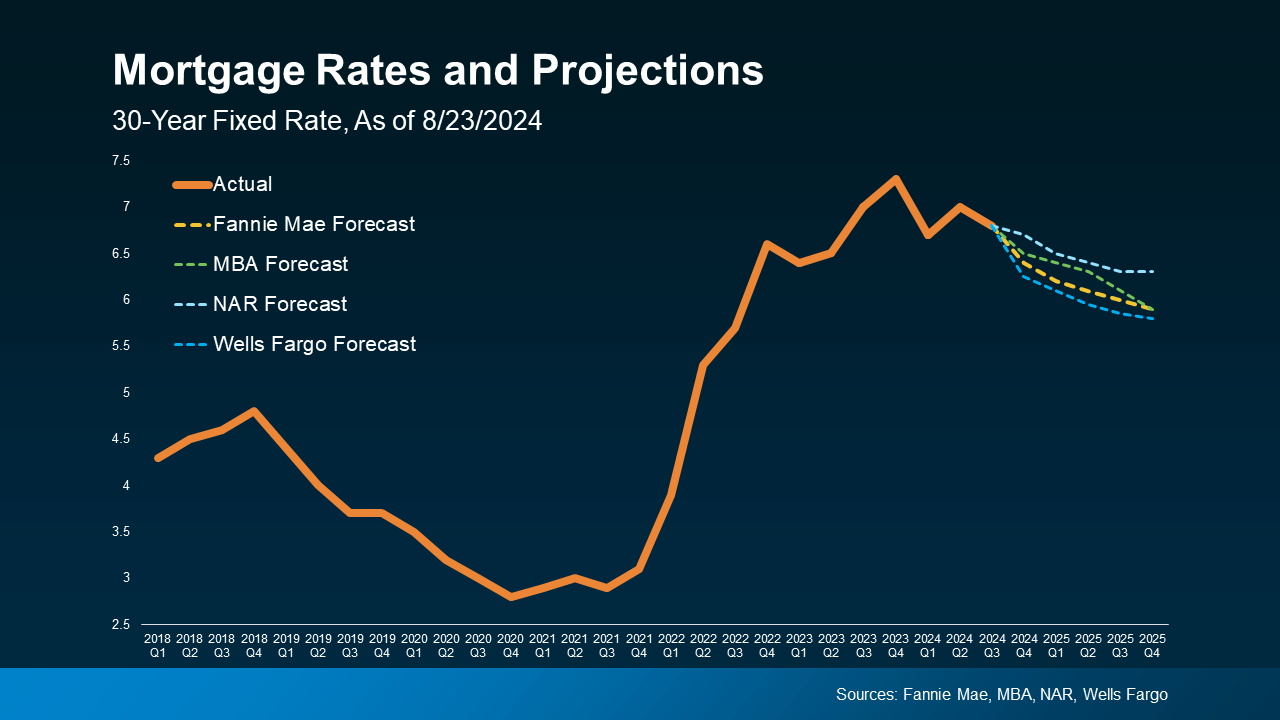
Here’s what experts in the industry project for mortgage rates through 2025. One contributing factor to this ongoing gradual decline is the anticipated cuts from the Fed. The graph below shows the latest forecasts from Fannie MaeMBANAR, and Wells Fargo (see graph below):

No Caption ReceivedSo, with recent improvements in inflation and signs of a cooling job market, a Federal Funds Rate cut is likely to lead to a moderate decline in mortgage rates (shown in the dotted lines). Here are two big reasons why that’s good news for both buyers and sellers:
1. It Helps Alleviate the Lock-In Effect

For current homeowners, lower mortgage rates could help ease the lock-in effect. That’s where people feel stuck within their current home because today’s rates are higher than what they locked in when they bought their current house.

If the fear of losing your low-rate mortgage and facing higher costs has kept you out of the market, a slight reduction in rates could make selling a bit more attractive again. However, this isn’t expected to bring a flood of sellers to the market, as many homeowners may still be cautious about giving up their existing mortgage rate.

2. It Should Boost Buyer Activity

For potential homebuyers, any drop in mortgage rates will provide a more inviting housing market. Lower mortgage rates can reduce the overall cost of homeownership, making it more feasible for you if you’ve been waiting to make a move.

What Should You Do?

While a Federal Funds Rate cut is not expected to lead to drastically lower mortgage rates, it will likely contribute to the gradual decrease that’s already happening.

And while the anticipated rate cut represents a positive shift for the future of the housing market, it’s important to consider your options right now. Jacob Channel, Senior Economist at LendingTree, sums it up well:

“Timing the market is basically impossible. If you’re always waiting for perfect market conditions, you’re going to be waiting forever. Buy now only if it’s a good idea for you.”

Bottom Line

The expected Federal Funds Rate cut, driven by improving inflation and slower job growth, is likely to have a positive, though gradual, impact on mortgage rates. That could help unlock opportunities for you. When you’re ready, let’s connect. That way you’ll be prepared to take action when the time is right for you.

Sept. 3, 2024

Should You Sell Now? The Lifestyle Factors That Could Tip the Scale


Are you on the fence about whether to sell your house now or hold off? It’s a common dilemma, but here’s a key point to consider: your lifestyle might be the biggest factor in your decision. While financial aspects are important, sometimes the personal motivations for moving are reason enough to make the leap sooner rather than later.

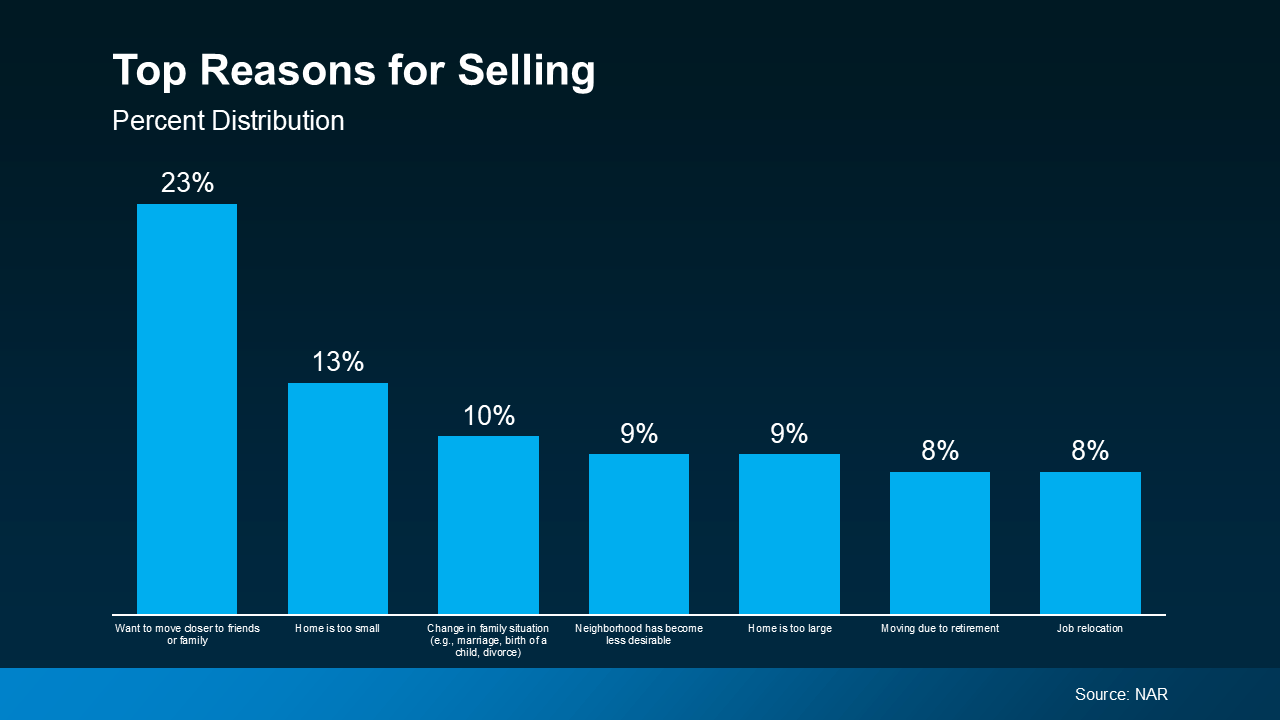
An annual report from the National Association of Realtors (NAR) offers insight into why homeowners like you chose to sell. All of the top reasons are related to life changes. As the graph below highlights:

No Caption ReceivedAs the visual shows, the biggest motivators were the desire to be closer to friends or family, outgrowing their current house, or experiencing a significant life change like getting married or having a baby. The need to downsize or relocate for work also made the list.
If you, like the homeowners in this report, find yourself needing features, space, or amenities your current home just can’t provide, it may be time to consider talking to a real estate agent about selling your house. Your needs matter. That agent will walk you through your options and what you can expect from today’s market, so you can make a confident decision based on what matters most to you and your loved ones.

Your agent will also be able to help you understand how much equity you have and how it can make moving to meet your changing needs that much easier. As Danielle Hale, Chief Economist at Realtor.com, explains:

“A consideration today's homeowners should review is what their home equity picture looks like. With the typical home listing price up 40% from just five years ago, many home sellers are sitting on a healthy equity cushion. This means they are likely to walk away from a home sale with proceeds that they can use to offset the amount of borrowing needed for their next home purchase.”

Bottom Line

Your lifestyle needs may be enough to motivate you to make a change. If you want help weighing the pros and cons of selling your house, let’s have a conversation.

Aug. 30, 2024

How To Avoid Today's Top Seller Mistakes

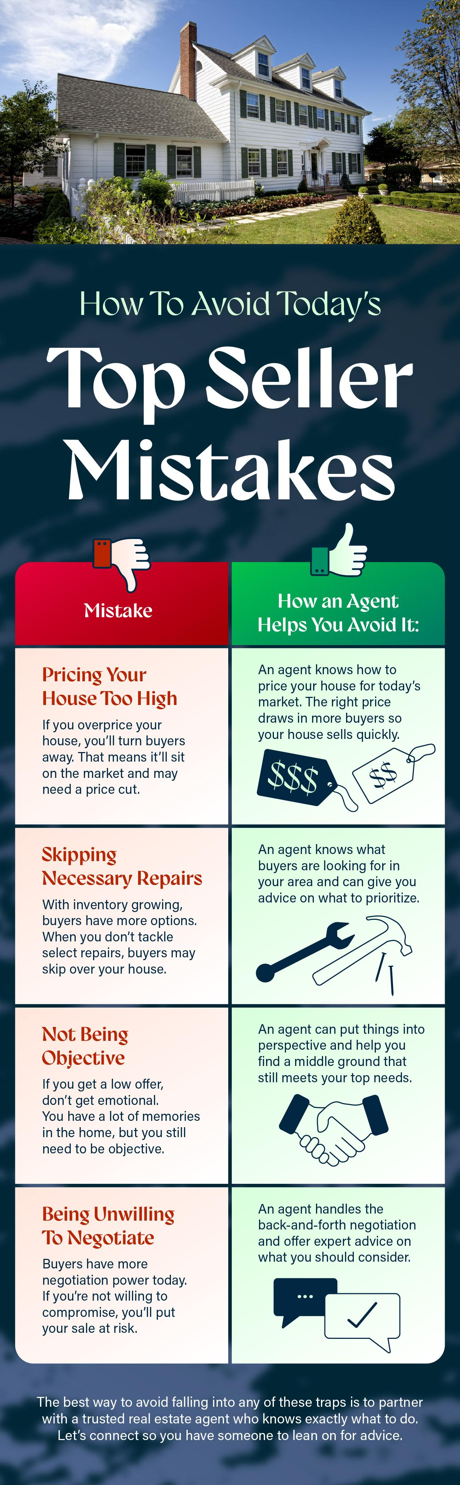
Want to know some of the top mistakes sellers are making today and how to make sure they don’t happen to you too? The biggest missteps are pricing a house too high, skipping repairs, not being objective, and not being willing to negotiate. And the best way to avoid falling into any of these traps is to partner with a trusted real estate agent who knows exactly what to do. Let’s connect so you have someone to lean on for advice.