Recent Blog Posts:

Nov. 18, 2020

Are we headed for a Foreclosure Crisis?


3 GRAPHS THAT PROVE WE’RE NOT HEADED FOR A FORECLOSURE CRISIS

We all know the saying about assumptions.

And if you don’t, well…just Google it.

With the massive surge of unemployment that happened this year, it’s natural to assume that a massive surge of foreclosures will follow.

However, history is not expected to repeat itself this time.

Here are 3 simple graphs that prove why we’re not headed for another foreclosure crisis.
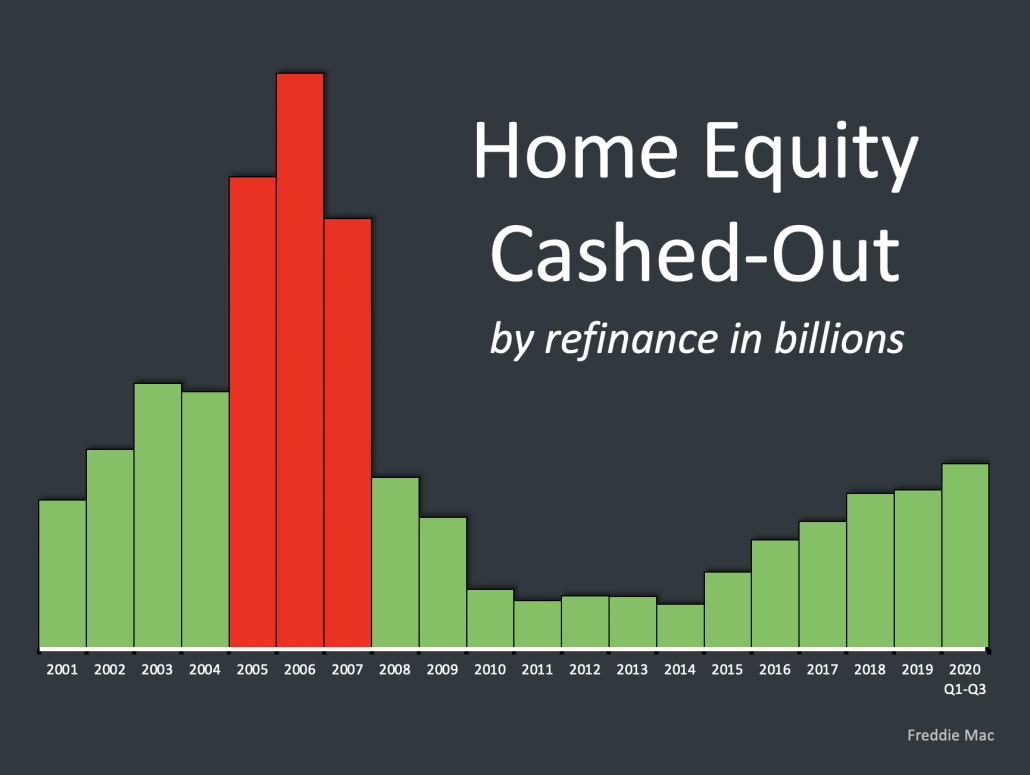
The unique conditions that led to the 2008 market collapse and foreclosure crisis were in big part due to cashed-out equity. With many borrowers owing more than they could afford on their homes, mass foreclosures followed. 

Today’s market, however, looks a lot different. Instead, homeowners have an abundance of equity, and lending standards are much stricter. This means that instead of foreclosing and walking away, many homeowners are in a good position to protect their investment. 
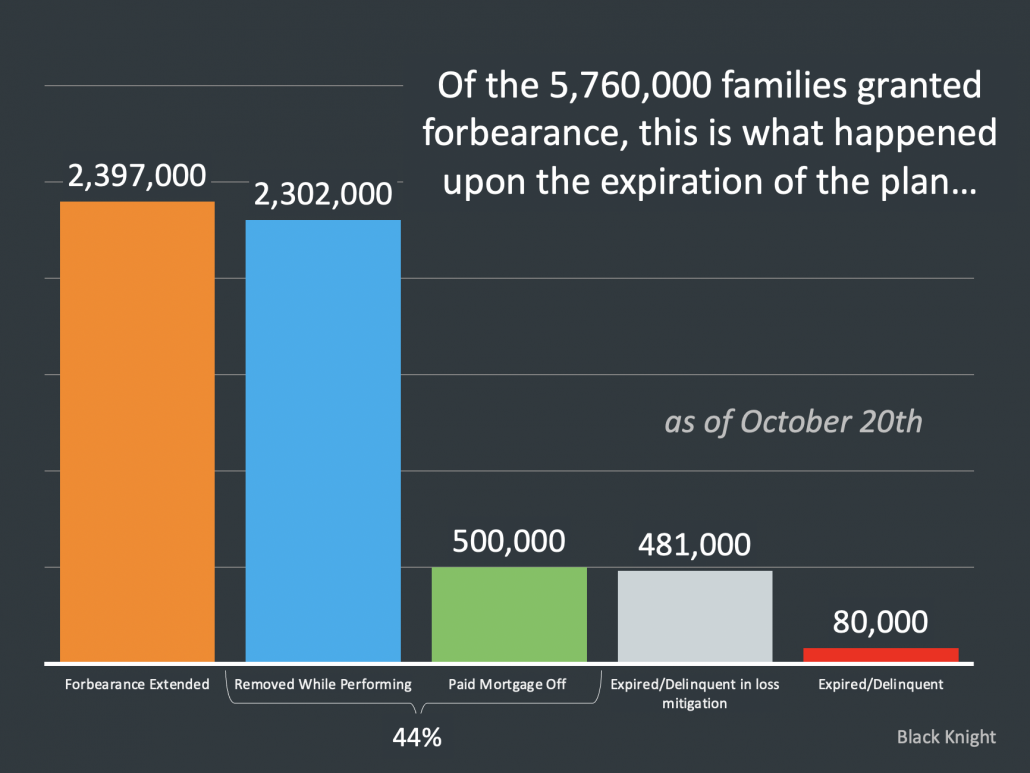
Looking at this graph, we can see that of those who requested forbearance, nearly 44% have either paid off their mortgage or opted out. It also shows that of all the homeowners in forbearance, only 80,000 are at risk of moving into foreclosures.

To drive this point home, Mike Fratantoni, Senior Vice President and Chief Economist at the Mortgage Bankers Association (MBA), said:

“Nearly two-thirds of borrowers who exited forbearance remained current on their payments, repaid their forborne payments, or moved into a payment deferral plan. All of these borrowers have been able to resume – or continue – their pre-pandemic monthly payments.”
After the 2008 financial collapse, we saw the worst foreclosure crises in history. The market was flooded with homes that had defaulted on their mortgage payments, spiking all the way up to over 500,000 at the peak in 2009.

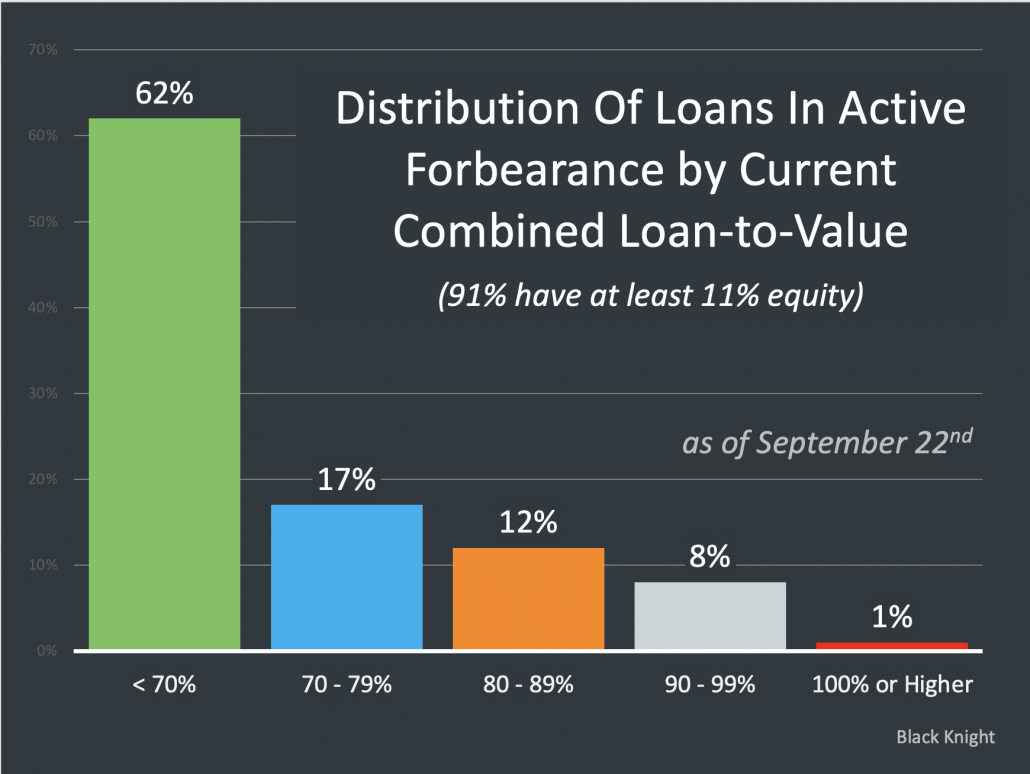
Today, we are looking at a much different story. According to Black Knight, 91% of homeowners in forbearance have 11% equity in their homes. While that may not seem like a big number, that much equity means rather than foreclose, those homeowners can not only sell their homes but walk away with gains from it.

According to Odeta Kushi, economist for First American:

“Economic distress and a lack of equity are the two triggers of a foreclosure. Each trigger by itself is necessary, but not sufficient for foreclosure. The percentage of economically distressed homeowner households is highest in COVID-19 hotspots… However, the equity built up since the Great Recession can provide an important buffer for distressed homeowners.”

The big question is: what happens when forbearance inevitably expires? Many lenders are offering to help homeowners create a plan for the deferred payments. There are multiple options that homeowners can pursue at this point, and with the right planning and communication with their lender, they may be able to avoid foreclosure, especially if they have equity in their homes.

Posted in Homeownership
Nov. 17, 2020

5 Powerful Reasons to Own Instead of Rent


5 Powerful Reasons to Own Instead of Rent

Owning a home has great financial benefits.

In a recent research paper, Homeownership and the American Dream, Laurie S. Goodman and Christopher Mayer of the Urban Land Institute explained:

“Homeownership appears to help borrowers accumulate housing and nonhousing wealth in a variety of ways, with tax advantages, greater financial flexibility due to secured borrowing, built-in ‘default’ savings with mortgage amortization and nominally fixed payments, and the potential to lower home maintenance costs through sweat equity.”

Let’s breakdown 5 major financial benefits of homeownership:

1. Housing is typically the one leveraged investment available

Homeownership allows households to amplify any appreciation on the value of their homes by a leverage factor. A 20% down payment results in a leverage factor of five, meaning every percentage point rise in the value of your home is a 5% return on your equity. If you put down 10%, your leverage factor is 10.

Example: Let’s assume you purchased a $300,000 home and put down $60,000 (20%). If the house appreciates by $30,000, that is only a 10% increase in value but a 50% increase in equity.

2. You’re paying for housing whether you own or rent

Some argue that renting eliminates the cost of property taxes and home repairs. Every potential renter must realize that all the expenses the landlord incurs (property taxes, repairs, insurance, etc.) are baked into the rent payment already – along with a profit margin!!

3. Owning is usually a form of “forced savings”

Studies have shown that homeowners have a net worth that is 44X greater than that of a renter. As a matter of fact, it was recently estimated that a family buying an average priced home this past January could build more than $42,000 in family wealth over the next five years.

4. Owning is a hedge against inflation

House values and rents tend to go up at or higher than the rate of inflation. When you own, your home’s value will protect you from that inflation.

5. There are still substantial tax benefits to owning

We know that the new tax reform bill puts limits on some deductions on certain homes. However, in the research paper referenced above, the authors explain:

“…the mortgage interest deduction is not the main source of these gains; even if it were removed, homeowners would continue to benefit from a lack of taxation of imputed rent and capital gains.”

Bottom Line

From a financial standpoint, owning a home has always been and will always be better than renting.

Nov. 16, 2020

Top 4 Renovations for the Greatest Return on Investment


Top 4 Renovations for the Greatest Return on Investment! [INFOGRAPHIC] | Keeping Current Matters

Some Highlights:

  • If you are planning on listing your house for sale this year, these four home improvement projects will net you the most Return on Investment (ROI).
  • Minor renovations can go a long way toward improving the quality of your everyday life and/or impressing potential buyers.
  • Whether you plan to stay in your house for a long time or just a few years, it’s smart to know which home renovations add the most value.
Nov. 14, 2020

Is it Safe to Sell My House Right Now?

In today’s real estate market, the buzz is all about how it’s a great time to sell your house. Buyer demand is high, and there simply aren’t enough homes available to buy to meet that growing need. This means now is the time to make a move so you can close the deal on your ideal terms.

Even in today’s strong sellers’ market, there are homeowners who are choosing not to sell due to ongoing concerns around the health crisis, financial uncertainty, and life in general. According to Zillow, here are the top three reasons homeowners who are thinking of selling sometime in the next three years are not putting their houses on the market right now:

  • 34% – Life is too uncertain right now
  • 31% – Financial uncertainty
  • 25% – COVID-19 health concerns

If you identify with any of these, you’re not alone. Whether it’s the future of your employment situation or simply being uncomfortable having guests in your home for showings, life feels a lot different than it did at this time last year. The good news is, real estate professionals have spent the majority of 2020 figuring out how to sell homes safely, and it’s paying off for those who are choosing to move this year.

Real estate agents are doing two things very well to make selling your house possible:

1. Agents Are Implementing Technology in the Process

While abiding by state and local regulations as a top priority, real estate agents are making sales happen safely and effectively by leveraging key pieces of technology. Agents know exactly what today’s buyers and sellers need and how to put the necessary digital steps in place. For example, agents have capitalized on the technology buyers find most helpful when deciding on a new home:

  • Virtual tours
  • Accurate and detailed listing information
  • Detailed neighborhood information
  • High-quality listing photos
  • Agent-led video chats

They’re listening to their audience and leveraging the tools that help buyers get an initial look at a home without having to step inside. This helps reduce the number of people entering your home, so only those who are very seriously interested need to take the next step: in-person showings.

2. Agents Are Facilitating Safe and Effective In-Person Showings

After leveraging technology, if you have serious buyers who still want to see your house in person, agents are following the guidelines set by the National Association of Realtors (NAR) and utilizing safe ways to proceed. Here are a few of them, understanding again that the agent’s top priority is always to follow­ state and local restrictions first:

  • Limiting in-person activity
  • R­­­equiring guests to wash their hands or use an alcohol-based sanitizer
  • Removing shoes or covering them with booties
  • Following CDC guidance on social distancing and wearing face coverings

Getting comfortable with your agent – a true trusted advisor – taking these steps under the modern-era safety standards might be your best plan. This is especially important if you’re in a position where you need to sell your house sooner rather than later.

As Jeff Tucker, Senior Economist for Zillow notes:

“Homeowners who feel life is uncertain right now may think they can still get a strong price if they delay selling until they have more clarity. The catch is that waiting to sell may raise the cost of a trade-up. This fall’s record low mortgage rates, which make a trade-up more affordable on a monthly basis, are not guaranteed to last.”

Bottom Line

In this new era in our lives, things are shifting quickly, and virtual strategies for sellers may be your ideal option. Opening your doors up to new approaches could be game-changing when it comes to selling your house while the market is leaning in your favor. As always, a trusted real estate professional can help you safely and effectively navigate all that’s new when it comes to making your next move.

Nov. 13, 2020

Why Working from Home May Spark Your Next Move?


Why Working from Home May Spark Your Next Move

If you’ve been working from home this year, chances are you’ve been at it a little longer than you initially expected. Businesses all over the country have figured out how to operate remotely to keep their employees healthy, safe, and productive. For many, it may be carrying into next year, and possibly beyond.

While the pandemic continues, Americans are re-evaluating their homes, floorplans, locations, needs, and more. Some need more space, while others need less. Whether you’re renting or own your home, if remote work is part of your future, you may be thinking about moving, especially while today’s mortgage rates are so low.

A recent study from Upwork notes:

“Anywhere from 14 to 23 million Americans are planning to move as a result of remote work.”

To put this into perspective, last year, 6 million homes were sold in the U.S. This means roughly 2 – 4X as many people are considering moving now, and there’s a direct connection to their ability to work from home.

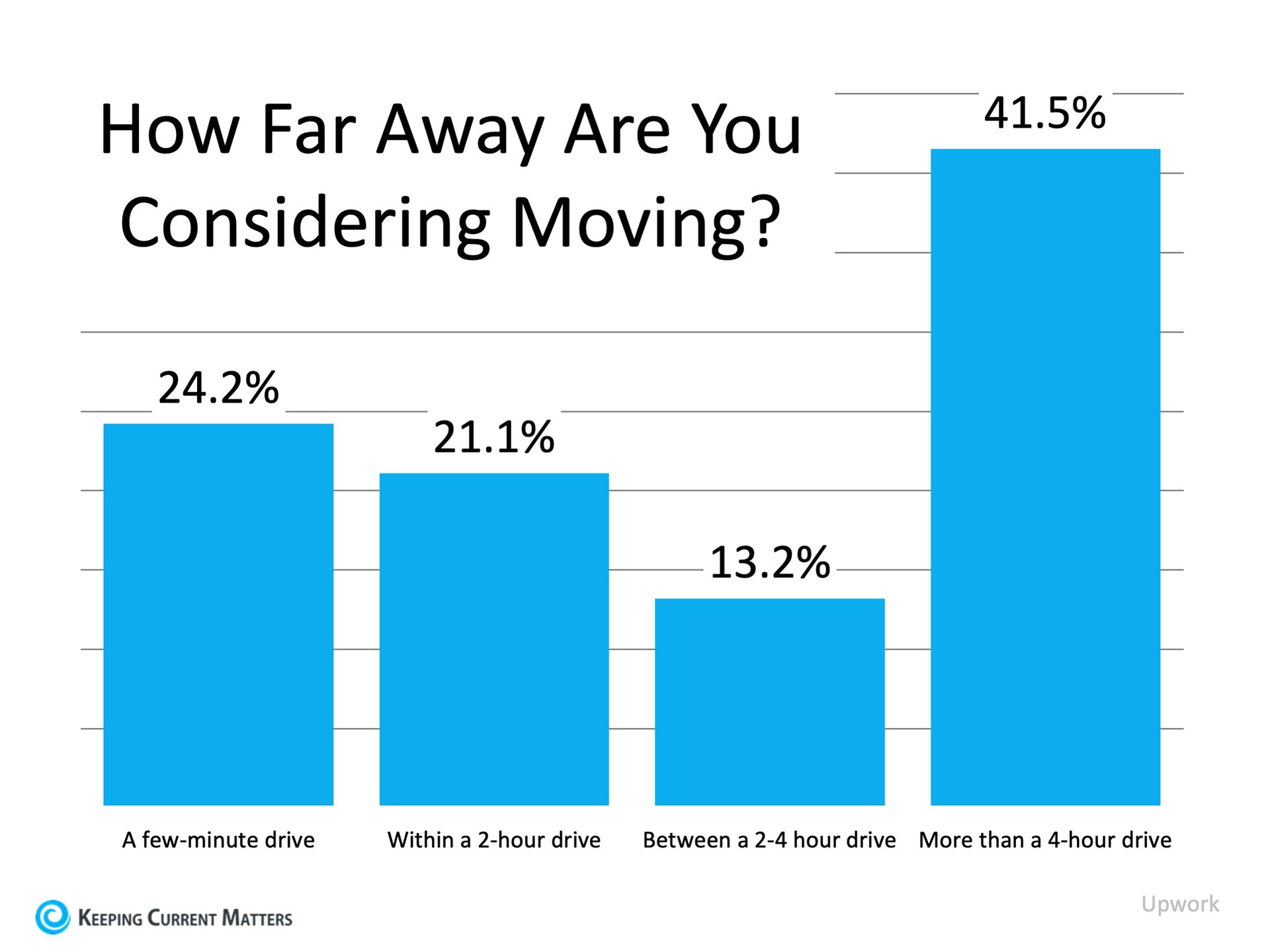
The same study also notes while 45.3% of people are planning to stay within a 2-hour drive from their current location, 41.5% of the people who are citing working from home as their primary reason for making a move are willing to look for a home more than 4 hours away from where they live now (See graph below):Why Working from Home May Spark Your Next Move | Keeping Current MattersIn some cases, moving a little further away from your current location might mean you can get more home for your money. If you have the opportunity to work remotely, you may have more options available by expanding your search. Upwork also indicates, of those surveyed:

“People are seeking less expensive housing: Altogether, more than half (52.5%) are planning to move to a house that is significantly more affordable than their current home.”

Whether you can eliminate your daily commute to the office, or you simply need more space to work from home, your plans may be changing. If that’s the case, it’s time to connect with a local real estate professional to assess your evolving needs and determine your path together.

Bottom Line

This has been a year of change, and what you need in a home is no exception. Reach out to your trusted real estate professional today to make sure you have expert guidance on your side to help you find a home that fits your remote work needs.

Nov. 12, 2020

Winter Will Bring a Flurry of Activity to the Housing Market

Winter Will Bring a Flurry of Activity to the Housing Market

In the second half of this year, the housing market surged with activity. Today, real estate experts are looking ahead to the winter season and the forecast is anything but chilly. As Lawrence Yun, Chief Economist for the National Association of Realtors (NAR), notes:

“It will be one of the best winter sales years ever.”

The typical winter slowdown in the housing market is simply not on the radar. Here’s why.

While today’s historically low mortgage rates are expected to remain low, they won’t be this low for much longer. This could be the last chance for homebuyers to secure such low rates, and they’re ready to take action. In a recent articleBankrate explained:

“If you’re looking to buy a home…expect mortgage rates to remain low into 2021. However, the possibility of rates falling to 2.5 percent or lower has faded as the U.S. economy has rebounded.”

As long as we continue to see low interest rates, we’ll see hopeful buyers on the hunt for their dream homes. Yun confirmed:

“The demand for home buying remains super strong…And we’re still likely to end the year with more homes sold overall in 2020 than in 2019…With persistent low mortgage rates and some degree of a continuing jobs recovery, more contract signings are expected in the near future.” 

The challenge, however, is the lack of homes available for sale. With that in mind, all eyes are on homeowners to see if they’ll sell this winter or wait until spring. Danielle Hale, Chief Economist for realtor.comsays it’s best for sellers to capitalize on this moment sooner rather than later:

“We currently see buyers sticking around in the housing market much later than we usually do this fall. If that trend continues, we will see more buyers in the market this winter, too. So, this winter is likely to be a good time to sell.”

With buyers ready to stay active this winter, sellers who want to close a deal on the best possible terms shouldn’t wait until spring to put their homes on the market.

Bottom Line

Experts agree the winter housing market could potentially be bigger than ever. Whether you’re ready to buy or sell, contact a local real estate professional today so you can be in your dream home by the new year.

Posted in For Sellers
Nov. 11, 2020

Tips to Sell Your House Safely Right Now


Tips to Sell Your House Safely Right Now [INFOGRAPHIC] | Keeping Current Matters

Some Highlights

  • Your agent now has over 6 months of experience selling houses during the pandemic and can make the process easier and safer for you today.
  • COVID-19 protocols and technology usage recommendations from the National Association of Realtors (NAR) are making it possible to sell houses right now, while agents continue to abide first and foremost by state and local regulations.
  • Reach out to a local real estate professional to discuss how to sell your house safely in today’s housing market.


Posted in For Sellers
Nov. 10, 2020

Homeownership Is a Key to Building Wealth

Homeownership Is a Key to Building Wealth

For years, real estate has been considered the best investment you can make. A major reason for this is due to the net worth a household gains through homeownership. In fact, according to the 2019 Survey of Consumer Finance Data from the Federal Reserve, for the average homeowner:

“…a primary home accounts for 90% of the total wealth of a family in the U.S.”

How do homeowners gain wealth?

Most large purchases, like cars and appliances, depreciate in value as they age, so it’s understandable to question how owning a home can increase wealth over time. In a simple equation, the National Association of Realtors (NAR) explains how the combination of paying your mortgage and home price appreciation grow overall wealth:

Principal Payments + Price Appreciation Gains = Housing Wealth Gain

As home values increase and you make payments toward your home loan, you’ll gain wealth through equity. The same article from NAR also addresses how wealth gains tend to play out over time:

“Housing wealth accumulation takes time and is built up by paying off the mortgage debt and by price appreciation. And while home prices can fall, home prices tend to recover and go up over the longer term. As of September 2020, the median sales price of existing home sales was $311,800, a 35% gain since July 2006 when prices peaked at $230,000.”

Taking a look at how equity has grown for the typical homeowner, it’s clear to see how real estate is a sound long-term investment. NAR notes:

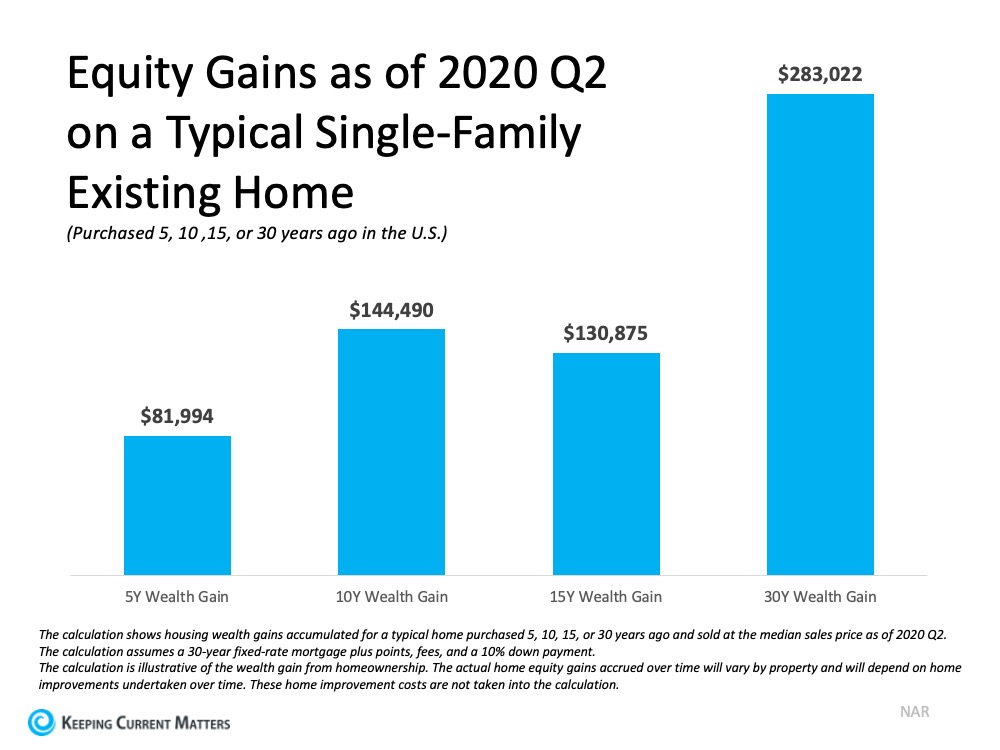
“Nationally, a person who purchased a typical home 30 years ago would have typically gained about $283,000 as of the second quarter of 2020.” (See graph below):

Homeownership Is a Key to Building Wealth | Keeping Current Matters

Bottom Line

Whether you’re a current homeowner planning to put your equity toward a new home or have hopes of buying your first home soon, homeownership will always be a great opportunity to build your net worth and overall wealth. Owning a home is truly an investment in your financial future.

Nov. 6, 2020

Making a Home for the Brave Possible

Making a Home for the Brave Possible [INFOGRAPHIC] | Keeping Current Matters

Some Highlights

  • VA Home Loans provide unique opportunities for Veterans, active-duty personnel, and their families in recognition of their service to our Nation.
  • For eligible individuals, options associated with VA Loans can help make the dream of homeownership a reality.
  • If you or someone you know may benefit from a VA Loan, reach out to a local real estate professional to learn more today.
Nov. 4, 2020

Real Estate Is a Driving Force in the Economy


Real Estate Is a Driving Force in the Economy

As the economy recovers from this year’s health crisis, the housing market is playing a leading role in the turnaround. It’s safe to say that what we call “home” is taking on a new meaning, causing many of us to consider buying or selling sooner rather than later. Housing, therefore, has thrived in an otherwise down year.

Today’s high buyer demand combined with low housing inventory means we’re seeing home prices appreciate at an above-average pace. This demand is being driven by those who want to take advantage of historically low mortgage rates. According to Freddie Mac:

“The record low mortgage rate environment is providing tangible support to the economy at a critical time, as housing continues to propel growth.”

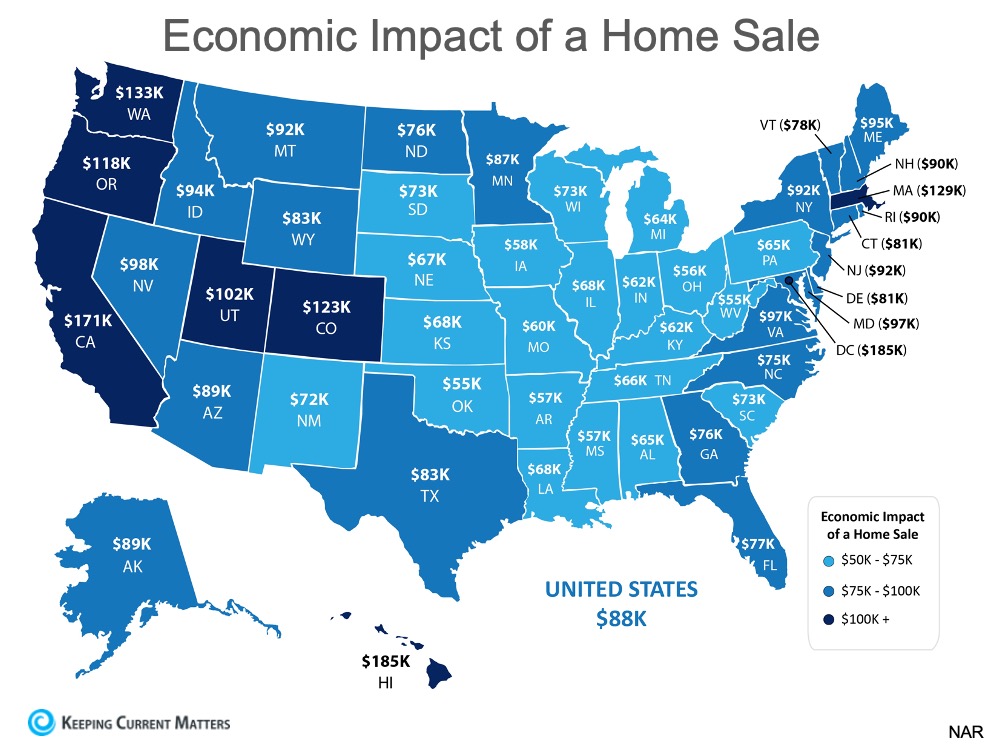
These factors are driving a positive impact on the economy as a whole. According to the National Association of Realtors (NAR), the real estate industry provided $3.7 billion dollars of economic impact to the country last year. To break it down, in 2019, the average newly constructed home contributed just over $88,000 per build to local economies. Across the country, real estate clearly makes a significant impact (See map below):Real Estate Is a Driving Force in the Economy | Keeping Current MattersIn addition, last week, the Bureau of Economic Analysis announced the U.S. Gross Domestic Product increased at an annual rate of 33.1% in the 3rd quarter of this year, after decreasing by 31.4% in the second quarter. There’s no doubt the growing economy is being fueled in part by the soaring housing market. Experts forecast this housing growth to carry into 2021, continuing to make a big impact on the economy next year as well.

Bottom Line

The American Dream of homeownership has continued to thrive in the midst of this year’s economic downturn, and “home” has taken on a new meaning for many of us during this time.  Best of all, the housing market is making a significant impact as the economy recovers.